

Request More Images
You can find images of this object above. Click on an image to zoom.
In case you are looking for additional images, please email us at ritesh@indikeauctions.com or use the request form below.


REGISTERED ANTIQUITY – NON-EXPORTABLE ITEM.
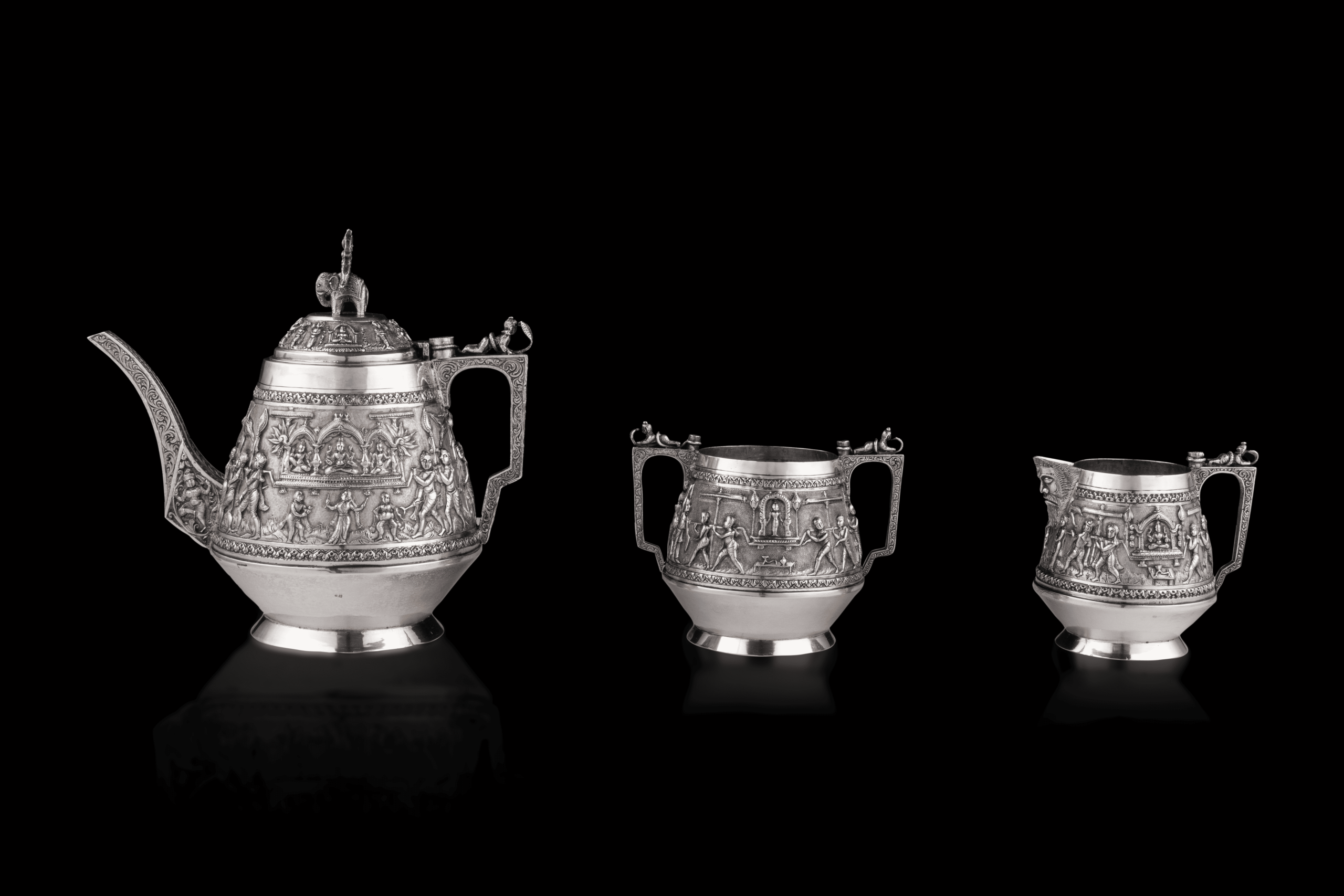
This 19th-century Indian Colonial solid silver antique three-piece tea set consists of a teapot, sugar bowl, and a cream jug. Each object features a straight tapered body richly and exquisitely repoussé, adorned with religious processions of men transporting idols. The scene showcases typical moments from the Meenakshi Amman temple in southern India. The handles are designed as snake whisperers, and the finials illustrate Shiva on an elephant. The finest examples of Raj silver appear to have been created between 1860 and 1920. Many such pieces were ordered by the British officials stationed in India, from the catalogues of local firms like P. Orr and Sons (of Madras) or from workshop drawings such as those of Oomersee Mawjee of Kutch.
Indian silverwork depicting deities and religious ceremonies draws inspiration from the bas-reliefs found on notable temples in southern India. This style is known as “Swami silver”. The word ‘Swami’ is associated with Lord Vishnu in Southern India.
The design tradition is closely associated with Madras, where it was primarily produced by the distinguished firm P. Orr and Sons, the leading silversmith company in Colonial South India. Recognised as the largest and most well-equipped establishment of its kind in India during its era, P. Orr and Sons was founded in 1848 by Peter Orr, a watchmaker from Edinburgh, and was rebranded in 1863 under the name P. Orr and Sons. The firm received commissions from prominent figures such as Maharaja Khanderao Gaekwad of Baroda, Maharaja Tukoji Rao II Holkar, and Maharaja Raja Rama Varma of Cochin, who commissioned exceptional silver works, many of which were subsequently presented to the Prince of Wales during his tour in India in 1875-76. The company is particularly renowned for its creation of the ‘Swami silver’, which features representations of Hindu deities. P. Orr and Sons produced silver works in the Victorian style, several of which are now part of the permanent collection at the Victoria and Albert Museum in London.
Goddess Meenakshi, an incarnation of Parvati, also has an important role during the Chithirai festival at the Meenakshi Amman Temple in Madurai. The temple’s procession of the divine wedding of Meenakshi and Sundareshwarar, named as the ‘Ther Thiruvizha,’ is an important religious practice. In the course of this festival, the divine spouses are taken around in a beautiful chariot procession for the public to view. In the same manner, the tea set presents a beautiful procession where there are characters accompanying a Devi, who in this context is Parvati herself. Parvati appears as the primary deity who is surrounded by her attendants, who are seen in dynamic positions. In fact, the craftsmanship of the tea set takes elements from the carvings at the Meenakshi Amman Temple. The tea set’s artwork conveys the beauty and the religiosity of the temple’s iconography. This elaborate artwork not only conveys the beauty associated with the festival, for example, at the Meenakshi Amman Temple, but also imbues the tea set with meaning and significance to offer it the status of devotional art from the precursor object, which is an object used for the purpose of taking tea.
This tea service set is a remarkable testimony of the combination of form, function, and faith expressed in Indian colonial silverware, with depiction of chased and repousse figures of common man and deities, an elephant-shaped spot and finial, and an overall surface decoration testifying to great skill and symbolic meaning. More than its usefulness, it holds a visual conversation between East and West, sacred and profane, functional and decorative, an enduring expression of the cultural and artistic dynamism of 19th-century India.
From a Private Collection in Mumbai, India.
In Good Condition.
Teapot
Height – 18cm.
Width – 18 x 11 cm.
Sugar Bowl
Height – 9 cm.
Width – 11.5 x 9 cm.
Cream Jug
Height – 9 cm.
Width – 9.5 x 7.5 cm.
1. An Indian Colonial Silver Mustard Pot by Hugh Gordon, Madras, ca. 1795
2. Delight in Design: Indian Silver for the Raj,September 17–December 13, 2008, Columbia University.
https://www.columbia.edu/cu/wallach/exhibitions/Delight-in-Design.html
3.Antique Indian Silver Tea Set, Madras (chennai), India – Circa 1880,Item-140.
4.Madras Three Piece “Swami Ware” Tea Set, Attributed to P.Orr & Sons, c. 1880.
https://www.saffronart.com/fixedjewelry/PieceDetails.aspx?iid=35975&pt=2&eid=3576
You can find images of this object above. Click on an image to zoom.
In case you are looking for additional images, please email us at ritesh@indikeauctions.com or use the request form below.
Buying at Indike is simple. Our friendly team of experts are always willing to discuss items entered in the auctions and also those that are currently available in our online shop with potential purchaser. All members of our dedicated team are here to help should you need any assistance. Please note that all items purchased are subject to our standard terms and conditions.

Bid live on our website, without additional online surcharges!

Bids are open until the window closes. Highest bid wins.
By accessing or using this website, mobile application, or any services provided by Indike, you acknowledge and agree to comply with the following terms and conditions. These terms govern your use of our platform and all content, features, and functionality made available through it. Use of this site is conditioned upon your acceptance of and compliance with these terms. If you do not agree with any part of the terms, you must not use the website or services.
All content provided on this site, including but not limited to text, graphics, logos, images, and software, is the property of Indike or its licensors and is protected by intellectual property laws. Unauthorized use, reproduction, or distribution of any content is strictly prohibited.
The information provided on this website is for general informational purposes only and may be subject to change at any time without notice. We do not warrant the accuracy, completeness, or reliability of any content on the site. Any reliance you place on such information is strictly at your own risk.
We reserve the right to suspend or terminate your access to the website without notice, for conduct that we believe violates these terms or is harmful to other users, us, or third parties, or for any other reason at our sole discretion.
You may not use this website in any way that causes, or may cause, damage to the website or impairment of its availability or accessibility. You may not use it for any unlawful, illegal, fraudulent, or harmful purpose or activity.
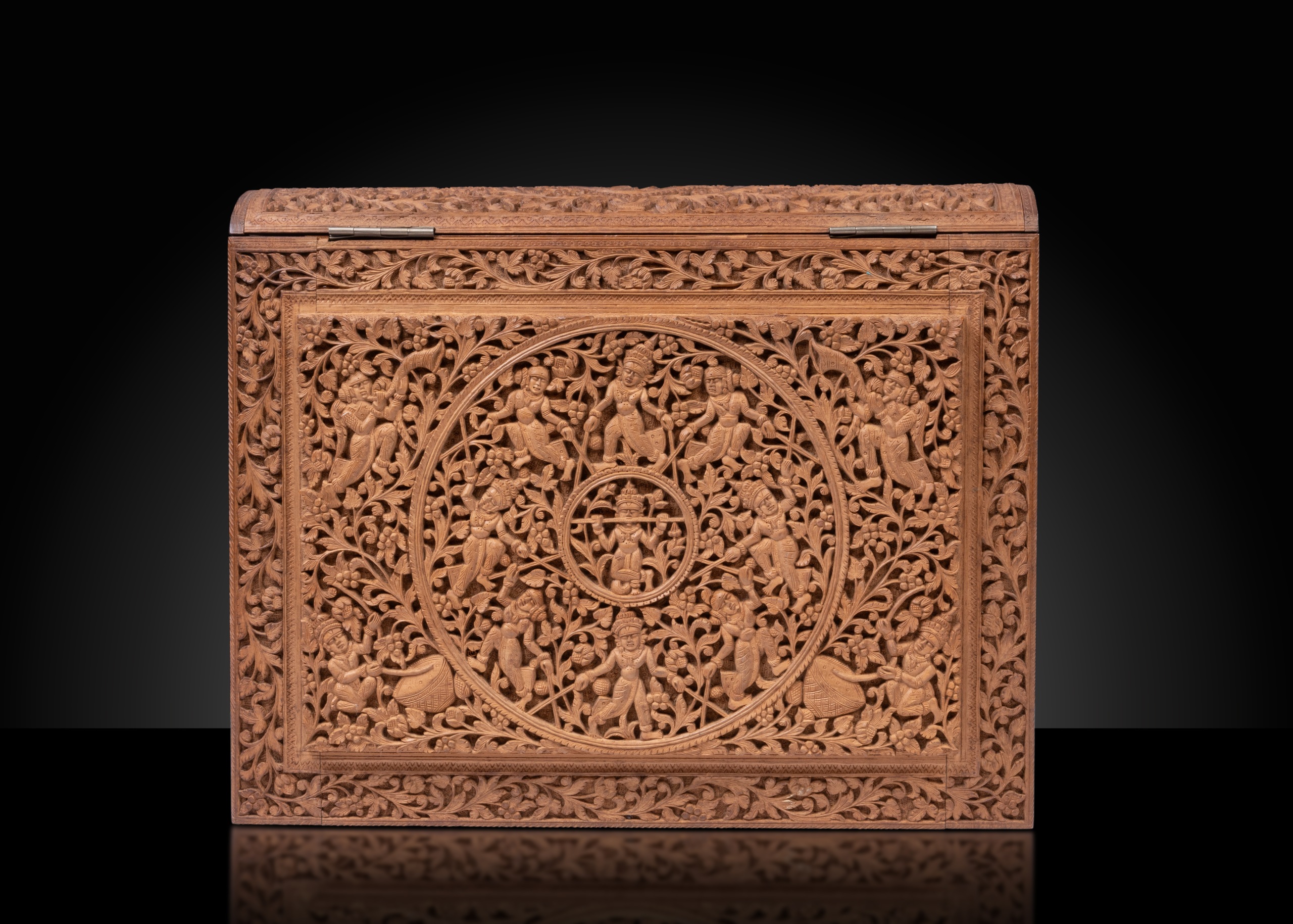
REGISTERED ANTIQUITY - NON-EXPORTABLE ITEM. Object Detail Wood has been masterfully shaped in a myriad of forms to cultivate the vibrant heritage of Gujarat. A remarkable piece dating back to the colonial era is a sandalwood photographic album. ...read more
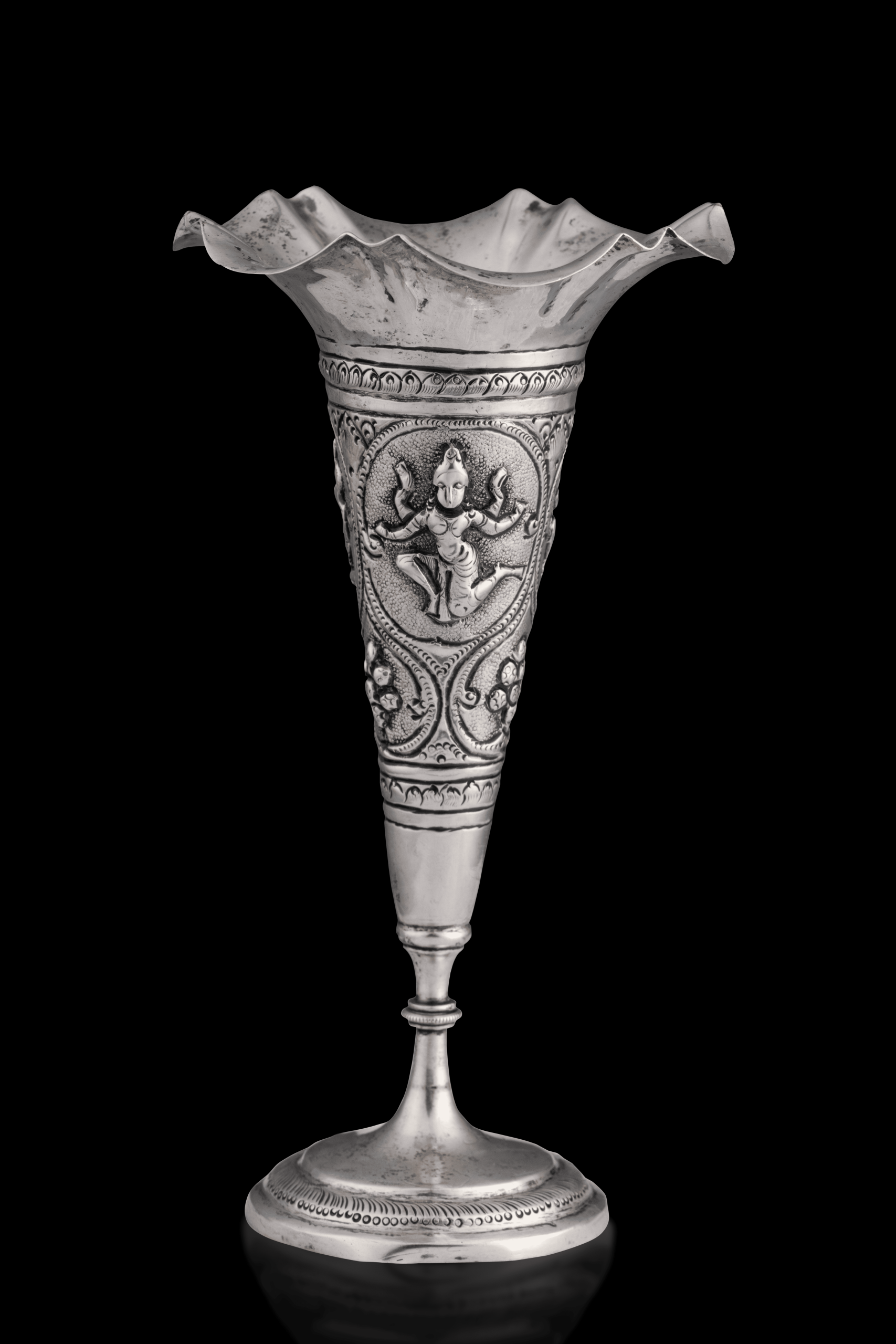
REGISTERED ANTIQUITY - NON-EXPORTABLE ITEM. Object Detail In Madras, Silver artefacts (began with the craftsmanship of teapots) adorned with images of deities in temple processions, receiving the label of Swami (god) silver. A name referred to a unique ...read more
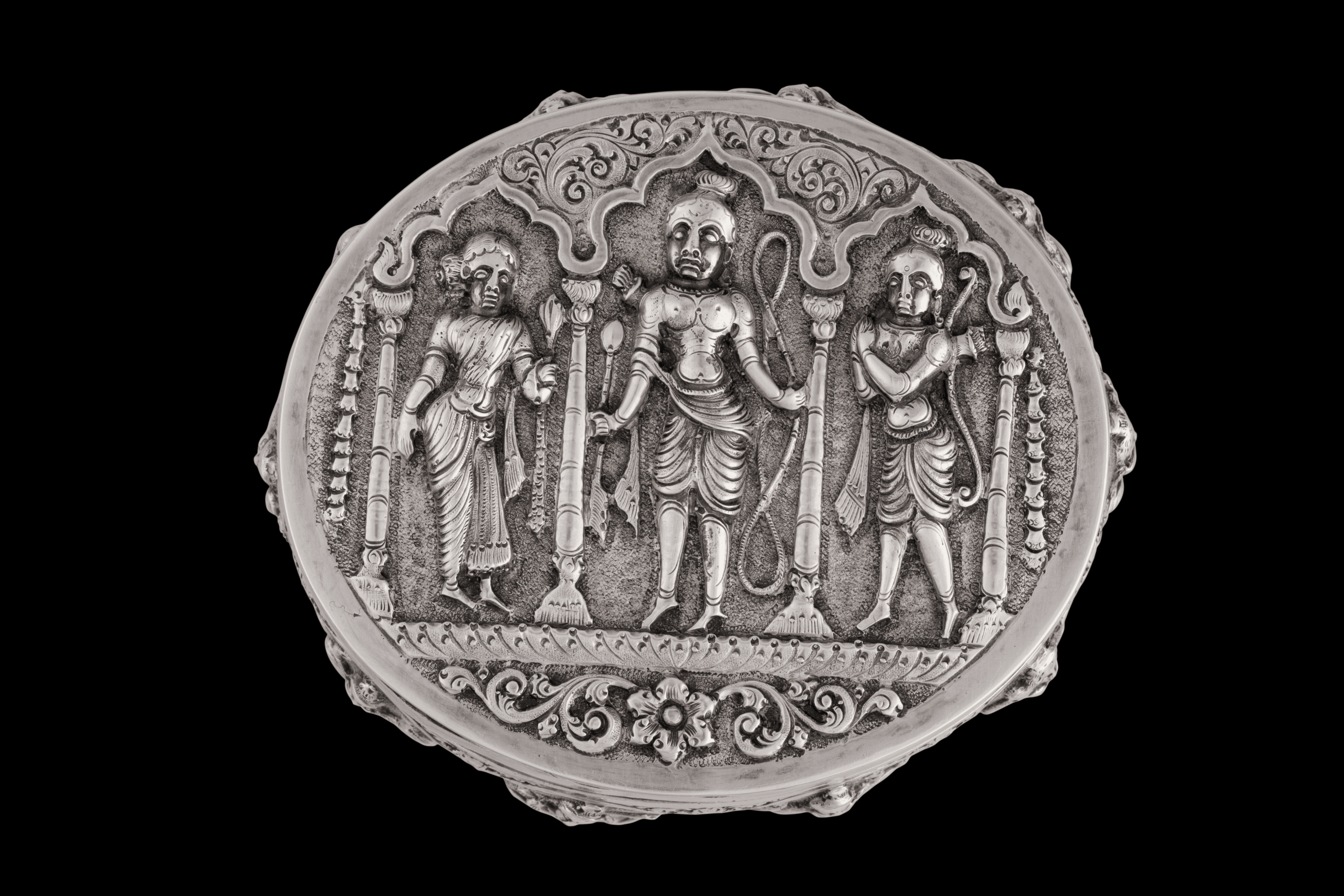
REGISTERED ANTIQUITY - NON-EXPORTABLE ITEM. Object Detail In British India, the lifestyle of the colonial elite uniquely influenced the types of silver objects they commissioned, often leading to designs that harmoniously blended European forms with rich local traditions. A ...read more
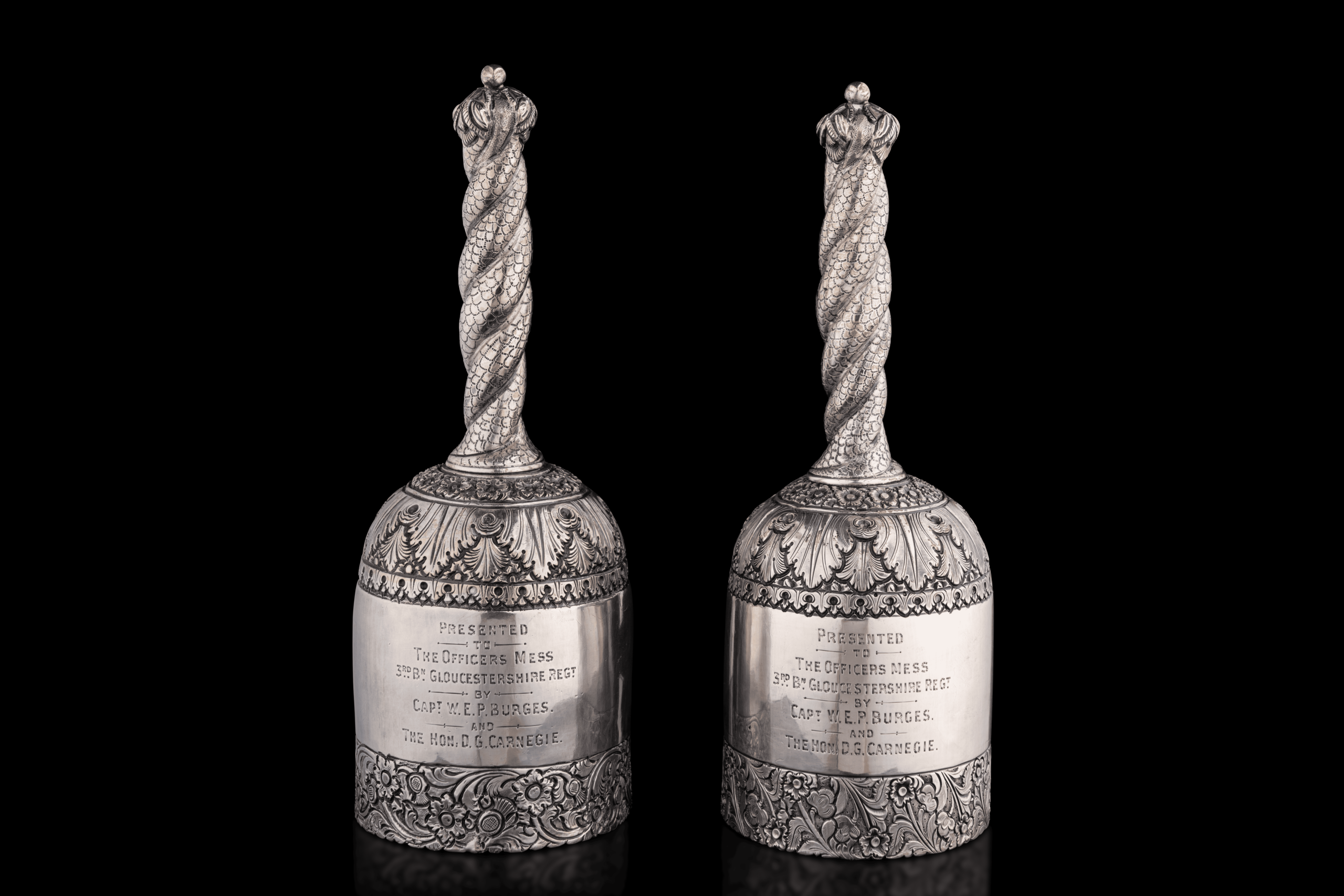
REGISTERED ANTIQUITY - NON-EXPORTABLE ITEM. Object Detail This pair of silver dinner table bells is a fine example of colonial Burmese silverware, where European dining forms were reimagined through the artistry of local craftsmen. The bells follow a ...read more
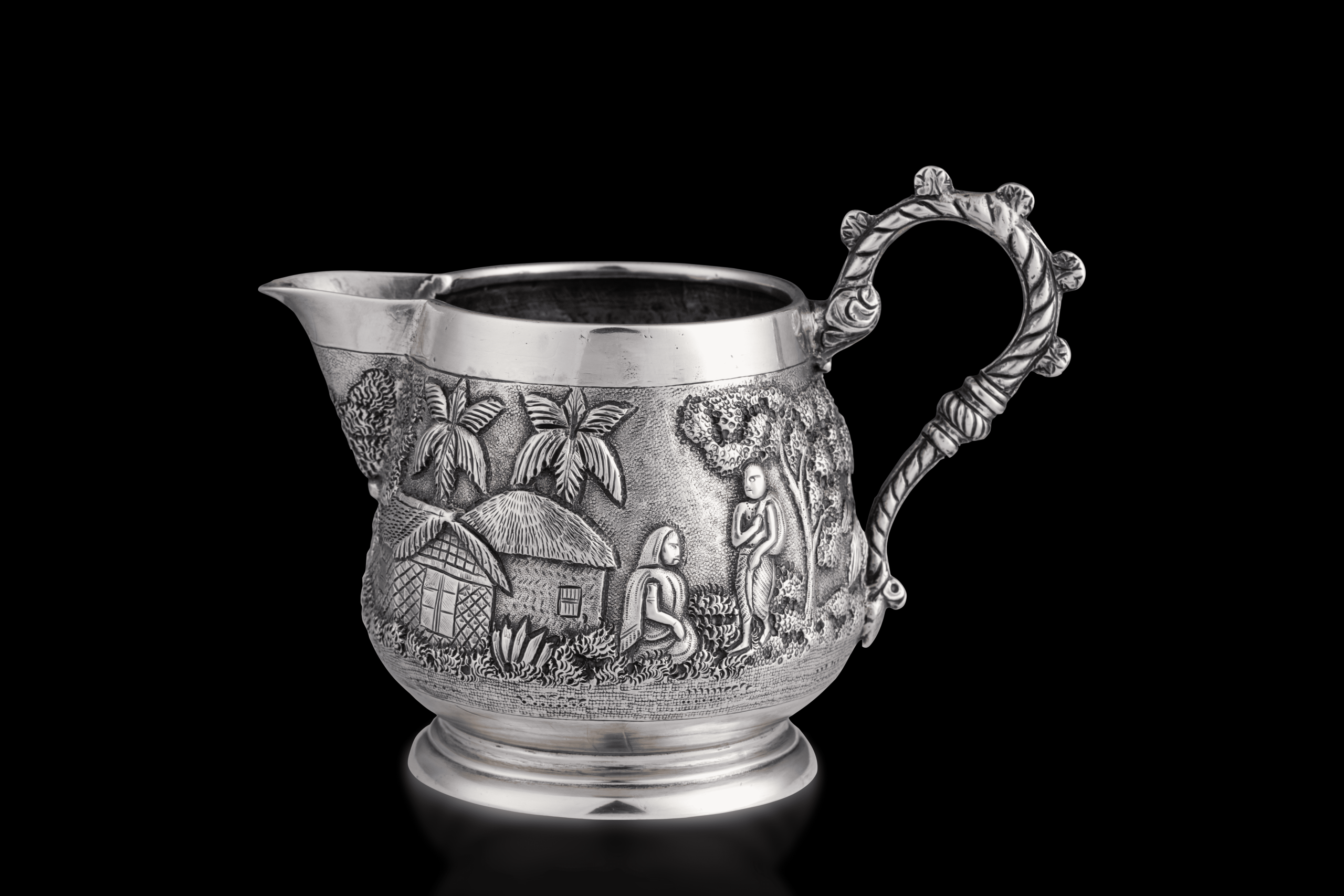
REGISTERED ANTIQUITY - NON-EXPORTABLE ITEM. Object Detail Indian silver usually refers to the silverware made during the colonial period. Calcutta style was notably associated with workshops in Bhowanipore, where firms like Dass & Dutt thrived. This milk strainer belongs ...read more
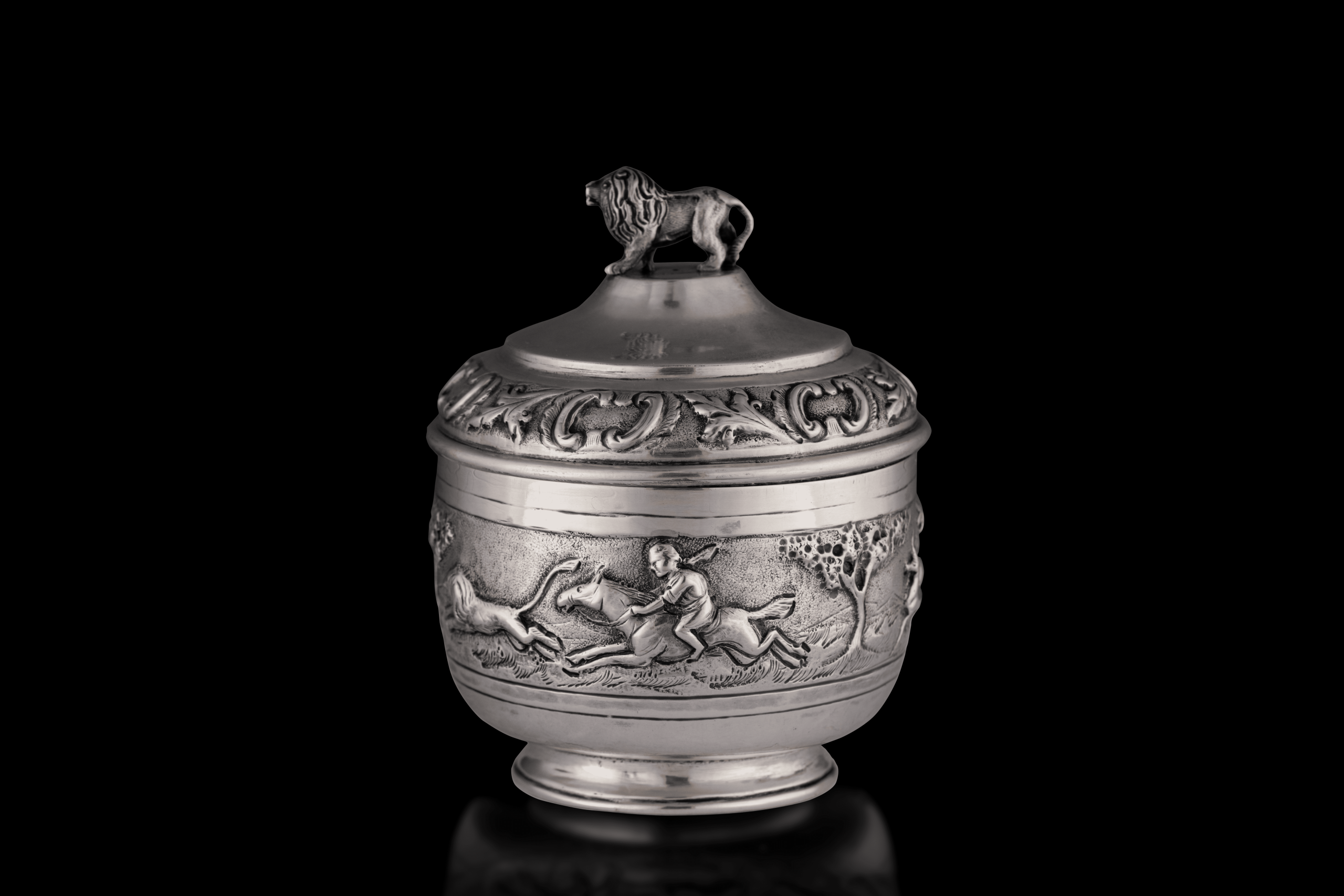
REGISTERED ANTIQUITY - NON-EXPORTABLE ITEM. Object Details This silverware was likely produced in early 19th-century Calcutta. The Lion finial on top attracts the viewer’s eye. The lion appears victorious, alert, and progressing. Lion is a symbol of power ...read more
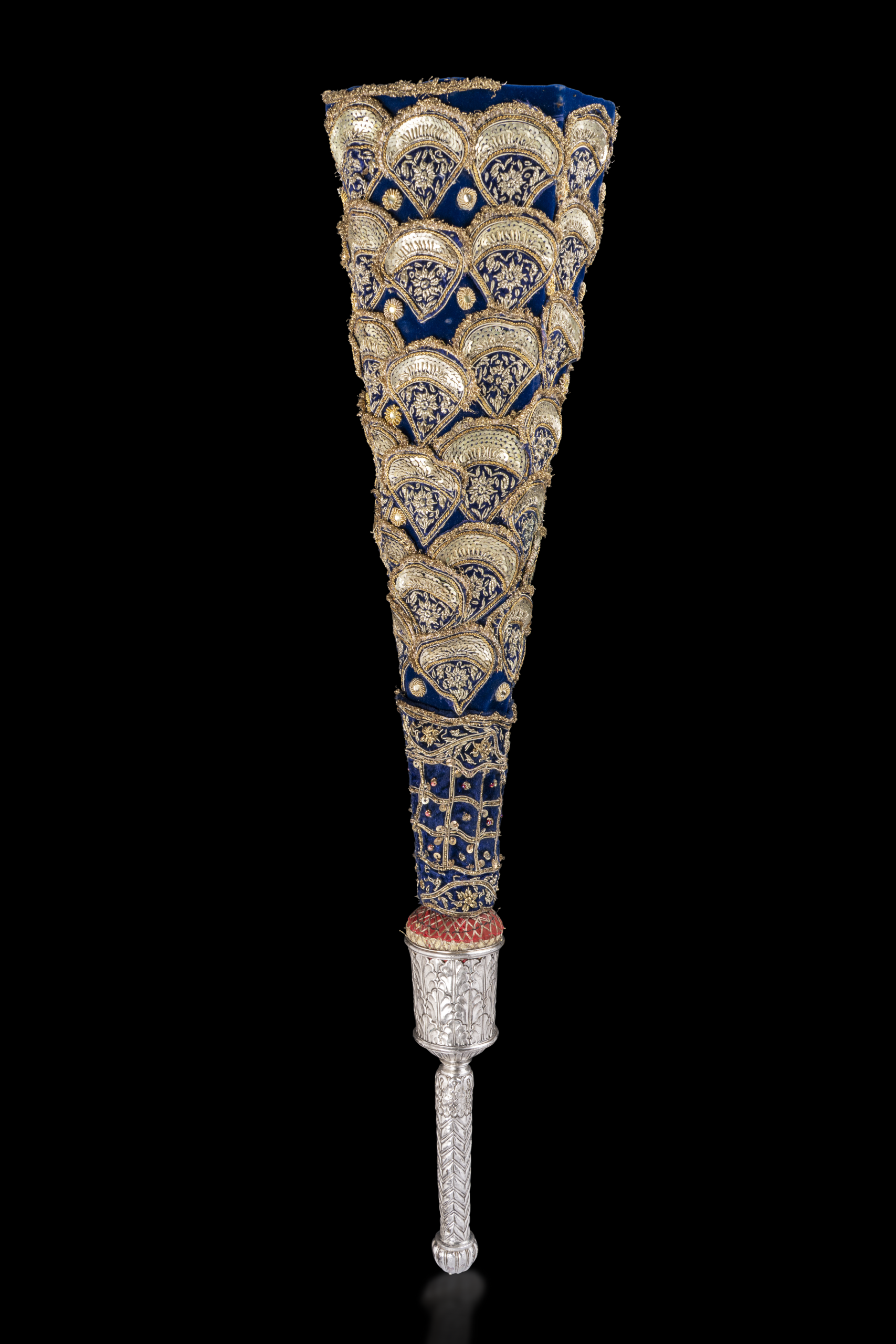
REGISTERED ANTIQUITY - NON-EXPORTABLE ITEM. Object Detail Fly whisks are commonly referred as Chamara or Chauri. This exquisite Chauri is masterfully adorned with intricate zardosi work, showcasing embellishments that beautifully emulate the vibrant appearance of peacock feathers. The ...read more
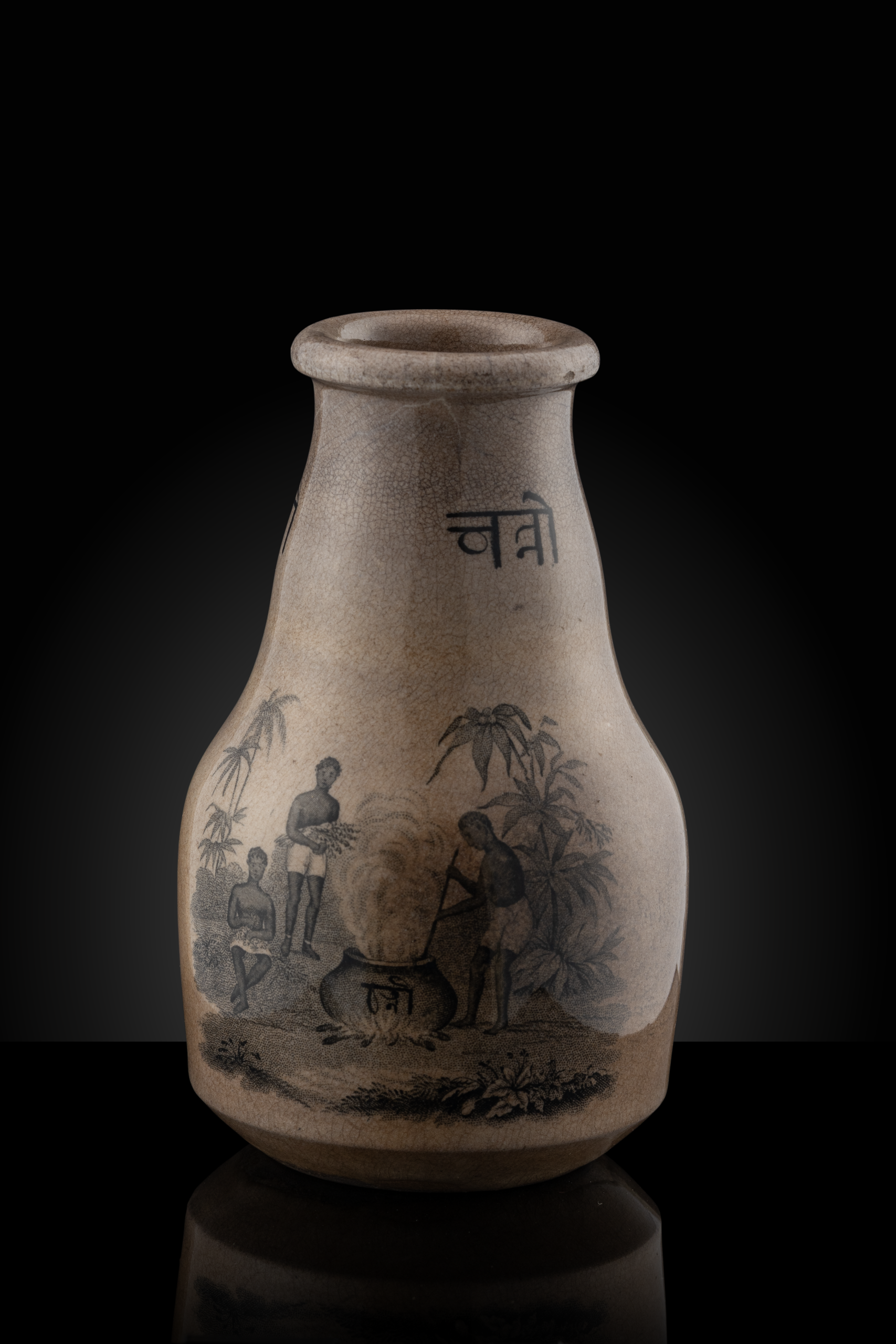
REGISTERED ANTIQUITY - NON-EXPORTABLE ITEM. Object Detail This vessel, more precisely ‘chutney’ pot as inscribed, is crafted from salt-glazed stoneware, a pottery technique known for its durable, non-porous body and distinctive glassy finish created by introducing salt into ...read more


