
Request More Images
You can find images of this object above. Click on an image to zoom.
In case you are looking for additional images, please email us at ritesh@indikeauctions.com or use the request form below.


REGISTERED ANTIQUITY – NON-EXPORTABLE ITEM.
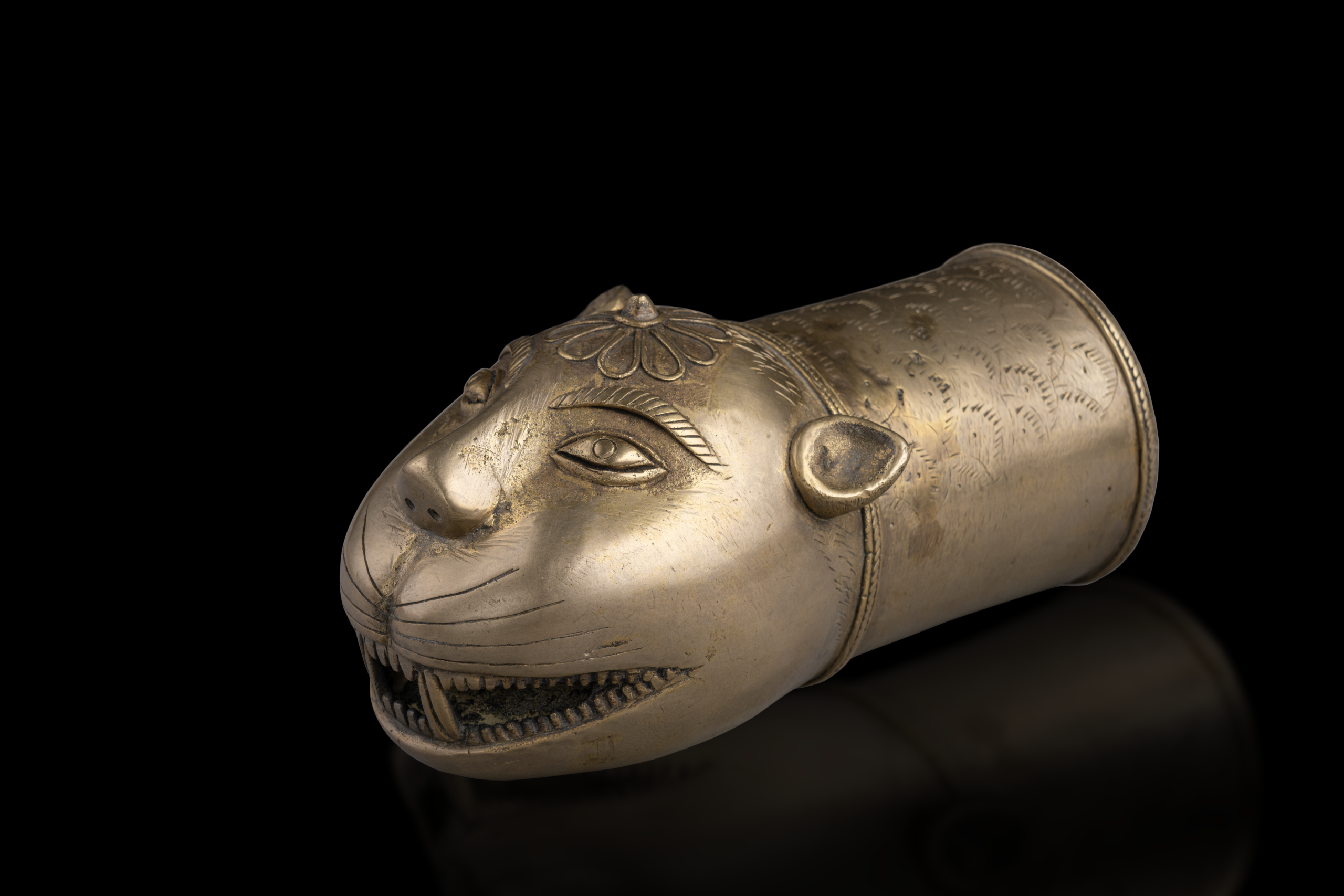
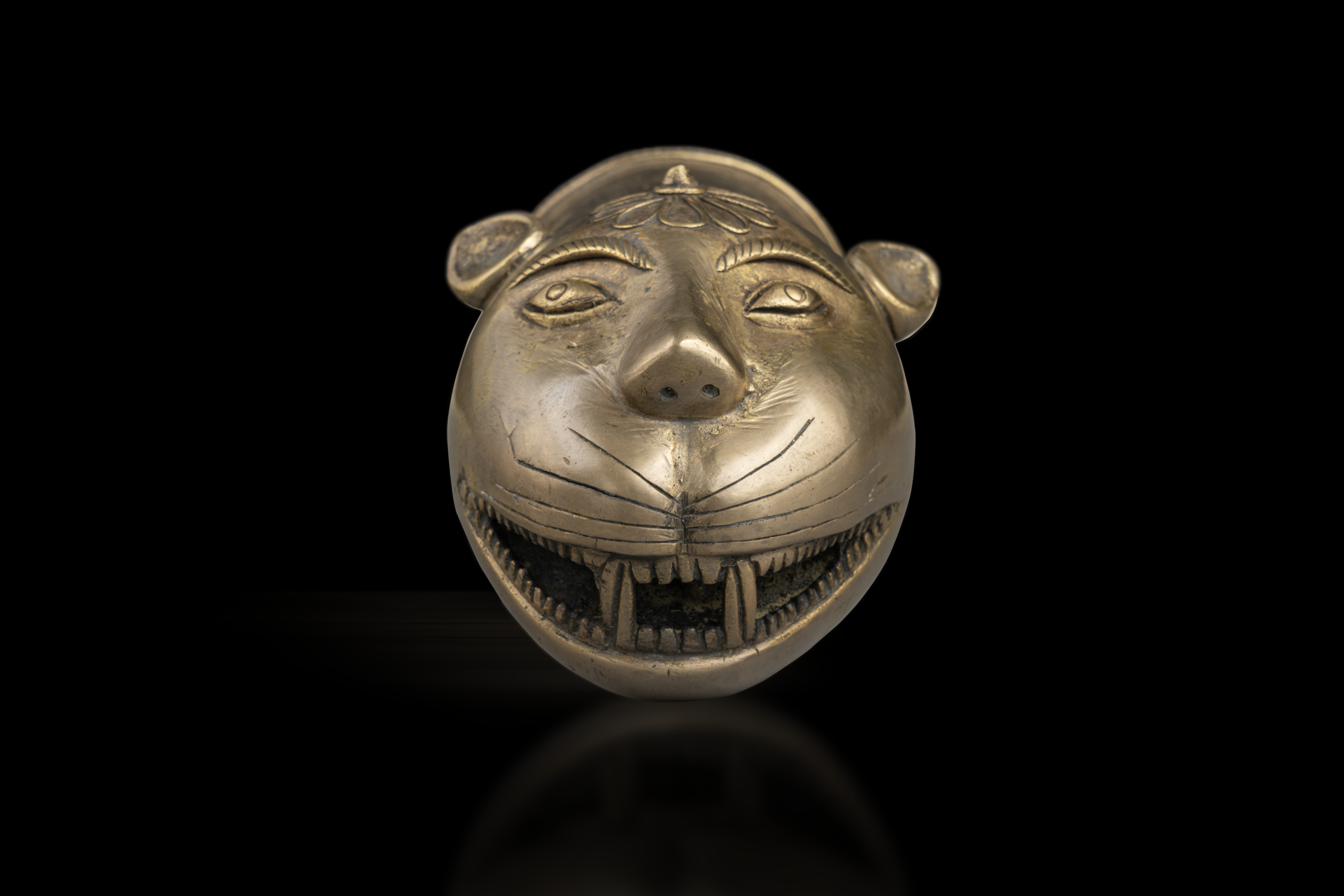
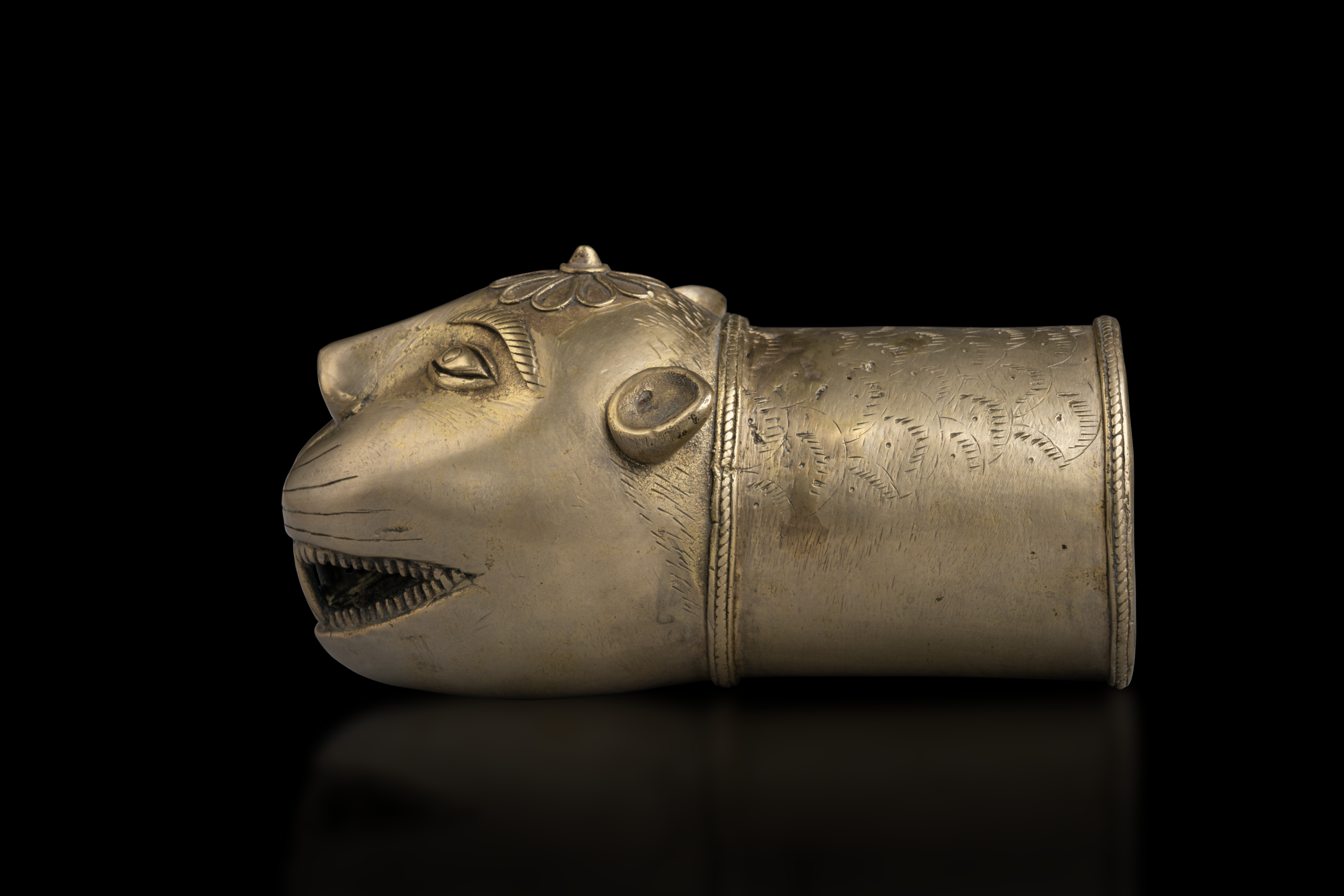
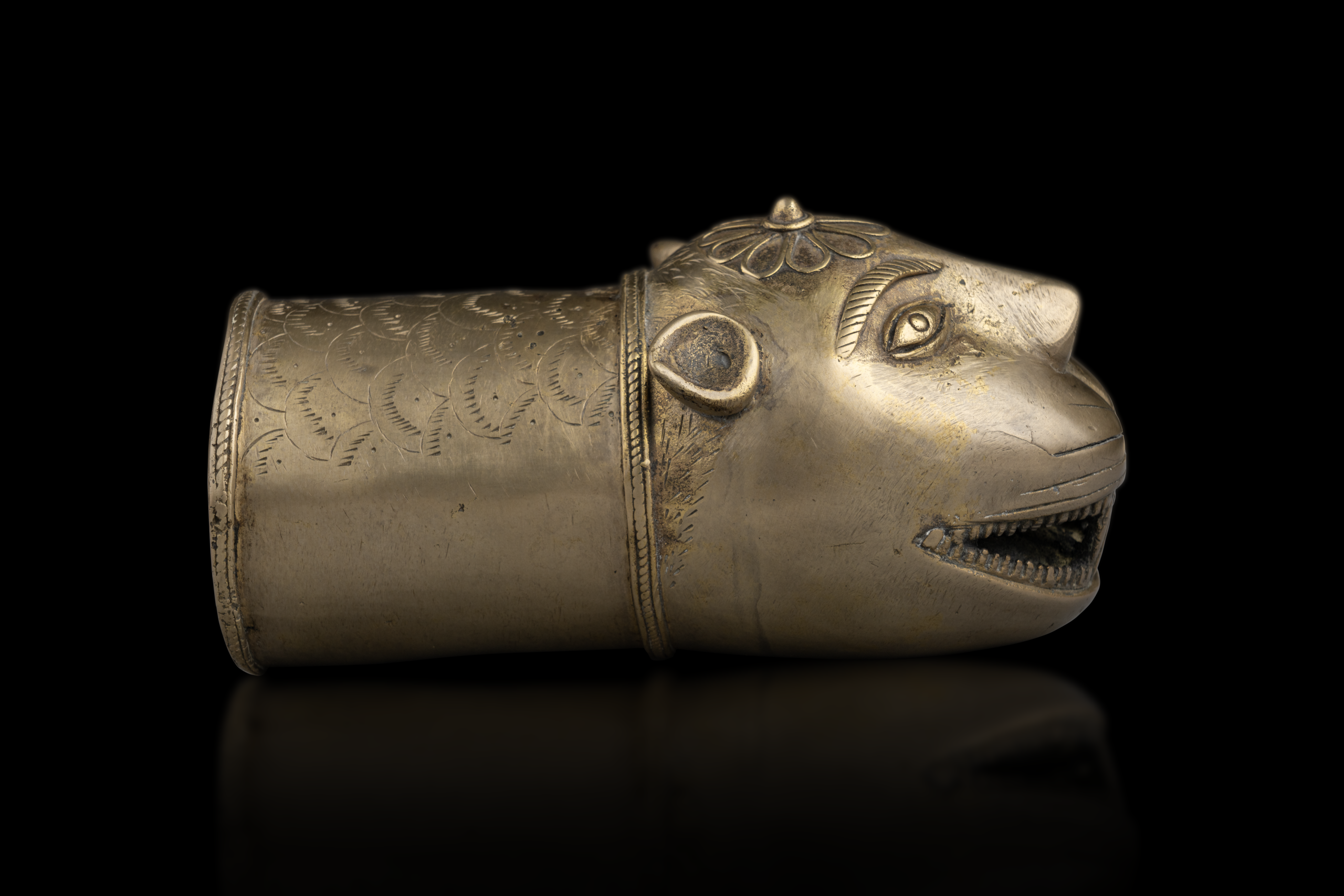
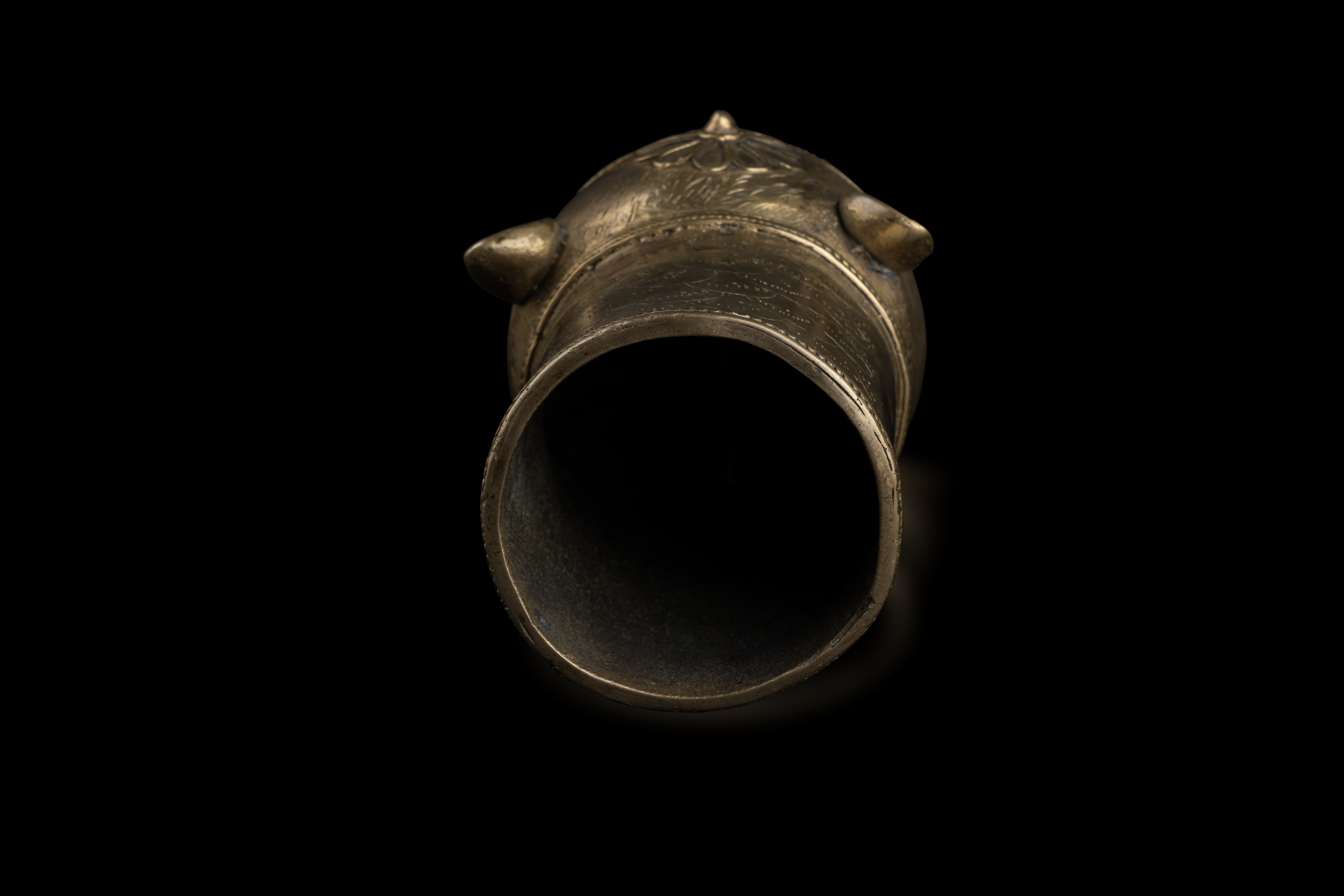
This tiger-head palanquin finial comes from the Deccan region and is attributed to the period ca. 1870–1890 C.E. It is a brass zoomorphic ornament and is designed for a wooden pole of a palanquin, at the end of the pole. It is both protective and decorative. It is distinguished by a sculpted tiger head, which makes the most prominent terminal of the finial, and a hollow cylindrical sleeve attached to the pole.
The finial consists of three main zones: the tiger head, collar rings and an engraved sleeve. The tiger’s head is stylized, it has a wide muzzle, its jaws are open, revealing rows of teeth and fangs, and its almond-shaped eyes express authority. The floral ornament is a stylized rosette, located on the forehead, which is a symbol of sacredness within Indian artistic and religious traditions, but it also converts the tiger into a guardian.
The cylindrical sleeve, covered with engraved scales, a sign of the quality and attention to detail of the craftsmanship, was made to hold the pole of the palanquin. It was made by the lost-wax process -“cire perdue” in French, the most famous technique of South India, passed down through generations of bronze-casting communities in the following centuries. In this finial the tiger symbolically carries important meanings embedded in the cultural narrative of the region.
It is a symbol of royalty and divine protection and is associated with Goddess Durga and other deities. It has been used in the royal insignia of a number of dynasties such as the Cholas and under the rule of Tipu Sultan in Mysore. The tiger’s iconography is one of strength, authority, and martial prowess and places the finial within a rich South Indian iconographic tradition. Even after the death of Tipu Sultan, this finial remained as a symbol of prestige and status used to display power and importance during ceremonial processions.
This tiger-head palanquin finial, dated to ca. 1870–1890 C.E., is an example of a visual tradition initiated by Tipu Sultan and demonstrates the social dynamics of Karnataka and the Deccan in the nineteenth century. The tiger is associated with prestige, power and aristocratic status, and this finial, placed prominently on a ceremonial palanquin, transmitted these associations to observers in processions.
Before the age of railways and motor vehicles, Palanquins were status symbols for kings, nobles and rich women. They were also used to transport deities during religious festivals, indicating that they were more than a means of transport, but a symbol of authority, identity and prestige. The materials and design of the palanquin, such as tiger-head finial, were important to this public declaration of status in society.
The finial design was intentionally chosen as a tiger. Historical records show that the images of fierce animals, like tigers, and mythical animals, like yali and makara, was often associated with male aristocrats and royal patrons, displaying the ideals of courage and martial prowess.
Floral motifs like lotuses were more common on palanquins for women, symbolizing graceand auspiciousness as against the floral motifs. The tiger-head finial’s fierce face and visible fangs clearly connote male aristocratic representation, while the forehead rosette suggests an additional layer of sacred protection.
From a Private Collection in Mumbai, India.
Good condition with minor wear.
Length – 35 cm.
1.Brittlebank, Kate. Tiger: The Life of Tipu Sultan. New Delhi: Juggernaut Books, 2016.
2.Davis, Richard H. Lives of Indian Images. Delhi: Motilal Banarsidass, 1999.
3.Google Arts & Culture. “Human Powered Sedans: The Story of Palanquins.” Accessed June 1, 2026. https://artsandculture.google.com/story/ZQUx535Ha2n-Kw.
4.Haidar, Navina Najat, and Marika Sardar, eds. Sultans of Deccan India, 1500–1700: Opulence and Fantasy. New York: The Metropolitan Museum of Art, 2015.
5.Jayakar, Pupul, and John Irwin. Textiles and Ornaments of India: A Selection of Designs. Edited by Monroe Wheeler. New York: The Museum of Modern Art, 1956.
6.Michell, George. Architecture and Art of Southern India: Vijayanagara and the Successor States, 1350–1750. The New Cambridge History of India, Vol. I, no. 6. Cambridge: Cambridge University Press, 1995.
7.The Cleveland Museum of Art. “Naga Finial.” Accessed June 2, 2026. https://www.clevelandart.org/print/art/1987.14.2.
8.The Metropolitan Museum of Art. The Metropolitan Museum of Art Bulletin. New Series, Vol. 54, No. 2. Recent Acquisitions: A Selection, 1995–1996. New York: The Metropolitan Museum of Art, Fall 1996.
9.The Trustees of the British Museum. “Palanquin (Metal Terminal to a Carrying Pole).” Museum no. 2017,3038.49. 18th–19th century. Accessed May 31, 2026. https://www.britishmuseum.org/collection/object/A_2017-3038-49.
1o.Victoria and Albert Museum. “Palanquin Hook.” Victoria and Albert Museum: Explore the Collections. Accessed June 2, 2026. https://collections.vam.ac.uk/item/O24972/palanquin-hook-sculpture-unknown/.
11.Victoria and Albert Museum. “Palanquin Pole End.” Victoria and Albert Museum: Explore the Collections. Accessed June 2, 2026. https://collections.vam.ac.uk/item/O34427/palanquin-pole-end-unknown/.
You can find images of this object above. Click on an image to zoom.
In case you are looking for additional images, please email us at ritesh@indikeauctions.com or use the request form below.
Buying at Indike is simple. Our friendly team of experts are always willing to discuss items entered in the auctions and also those that are currently available in our online shop with potential purchaser. All members of our dedicated team are here to help should you need any assistance. Please note that all items purchased are subject to our standard terms and conditions.

Bid live on our website, without additional online surcharges!

Bids are open until the window closes. Highest bid wins.
By accessing or using this website, mobile application, or any services provided by Indike, you acknowledge and agree to comply with the following terms and conditions. These terms govern your use of our platform and all content, features, and functionality made available through it. Use of this site is conditioned upon your acceptance of and compliance with these terms. If you do not agree with any part of the terms, you must not use the website or services.
All content provided on this site, including but not limited to text, graphics, logos, images, and software, is the property of Indike or its licensors and is protected by intellectual property laws. Unauthorized use, reproduction, or distribution of any content is strictly prohibited.
The information provided on this website is for general informational purposes only and may be subject to change at any time without notice. We do not warrant the accuracy, completeness, or reliability of any content on the site. Any reliance you place on such information is strictly at your own risk.
We reserve the right to suspend or terminate your access to the website without notice, for conduct that we believe violates these terms or is harmful to other users, us, or third parties, or for any other reason at our sole discretion.
You may not use this website in any way that causes, or may cause, damage to the website or impairment of its availability or accessibility. You may not use it for any unlawful, illegal, fraudulent, or harmful purpose or activity.
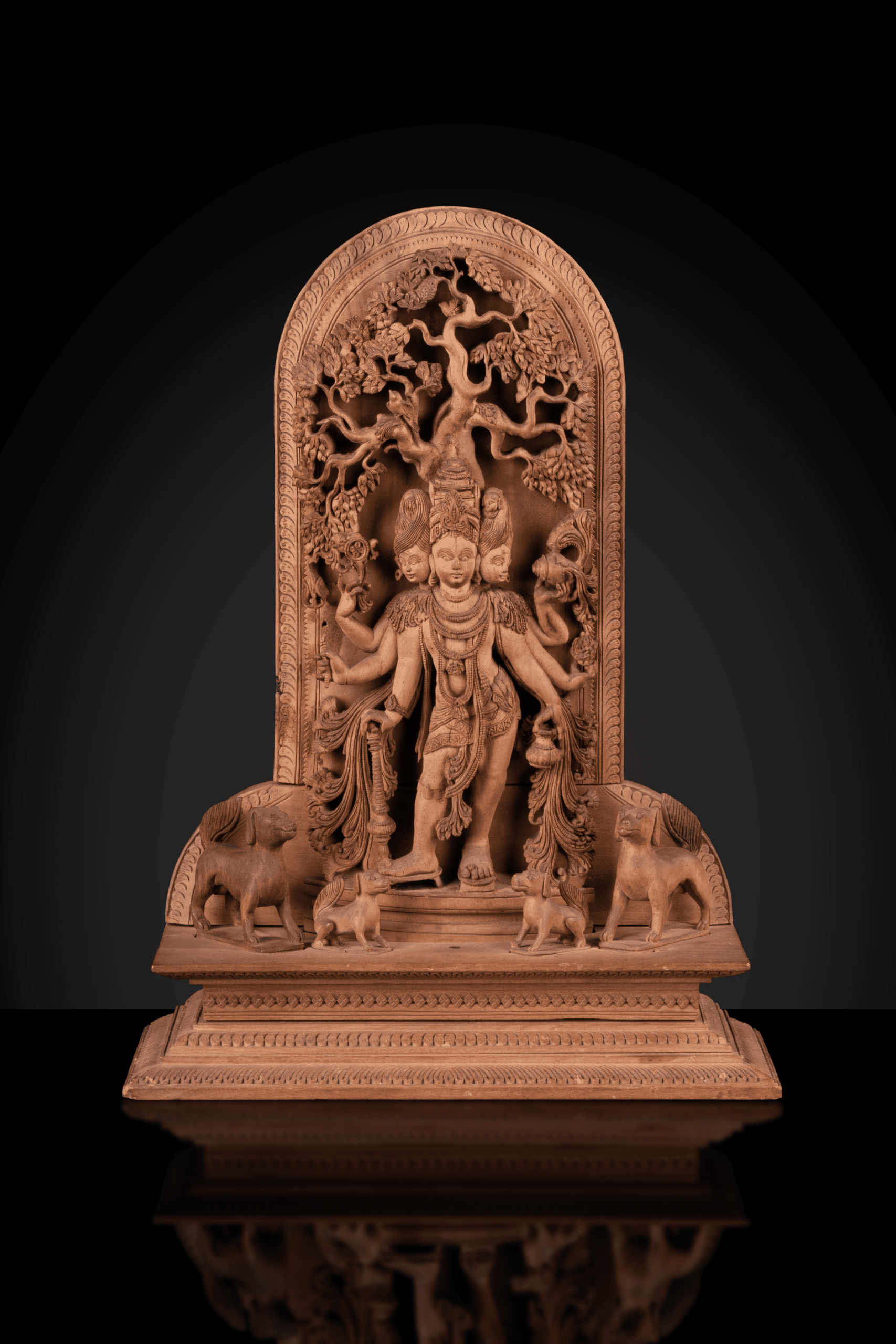
REGISTERED ANTIQUITY - NON-EXPORTABLE ITEM. Object Detail This Particular piece of Sculptural art represents an Image of Dattātreya, believed to be a minor incarnation of Lord Vishnu. He was an Aestic. In this portrayal, he is beautifully depicted ...read more
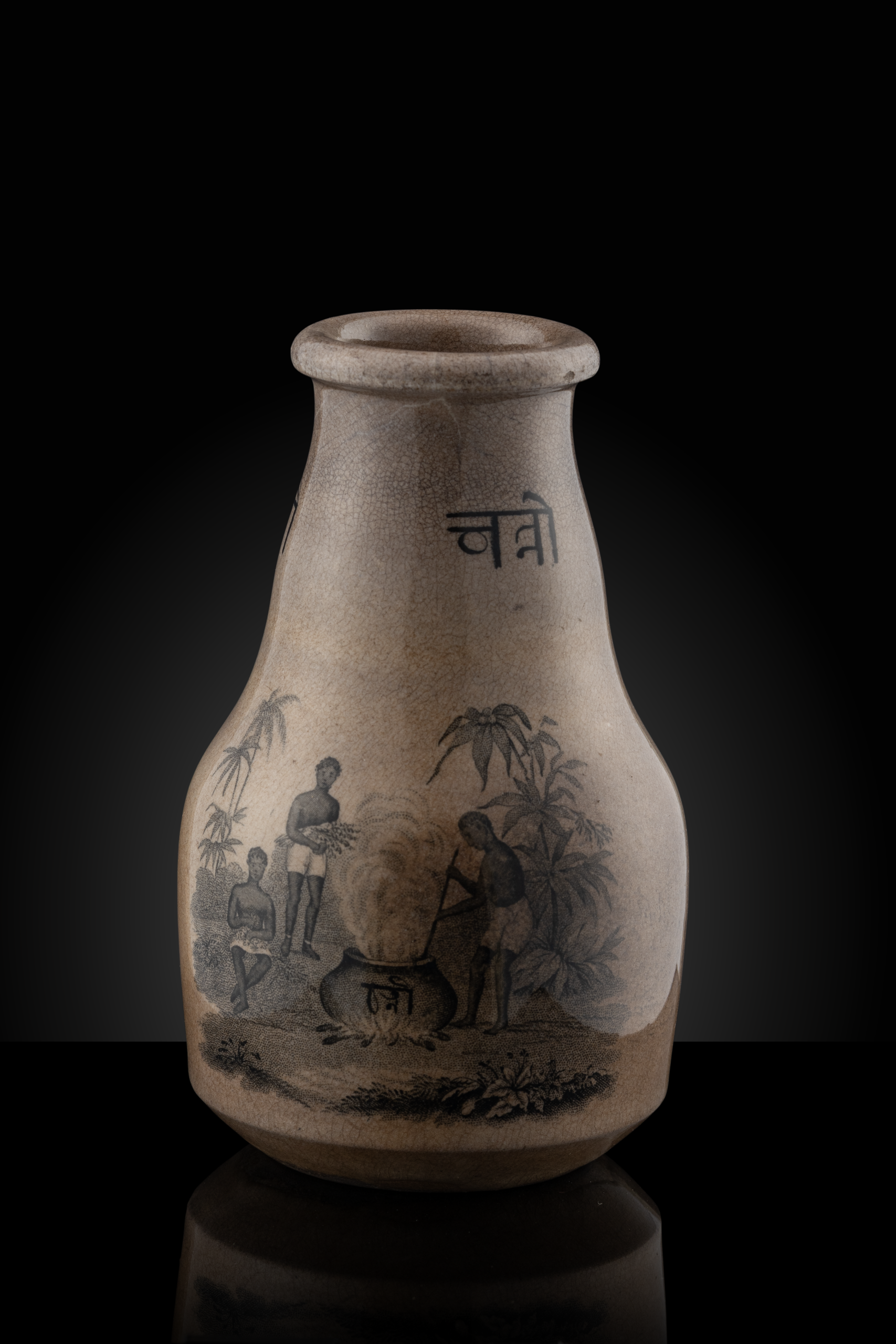
REGISTERED ANTIQUITY - NON-EXPORTABLE ITEM. Object Detail This vessel, more precisely ‘chutney’ pot as inscribed, is crafted from salt-glazed stoneware, a pottery technique known for its durable, non-porous body and distinctive glassy finish created by introducing salt into ...read more
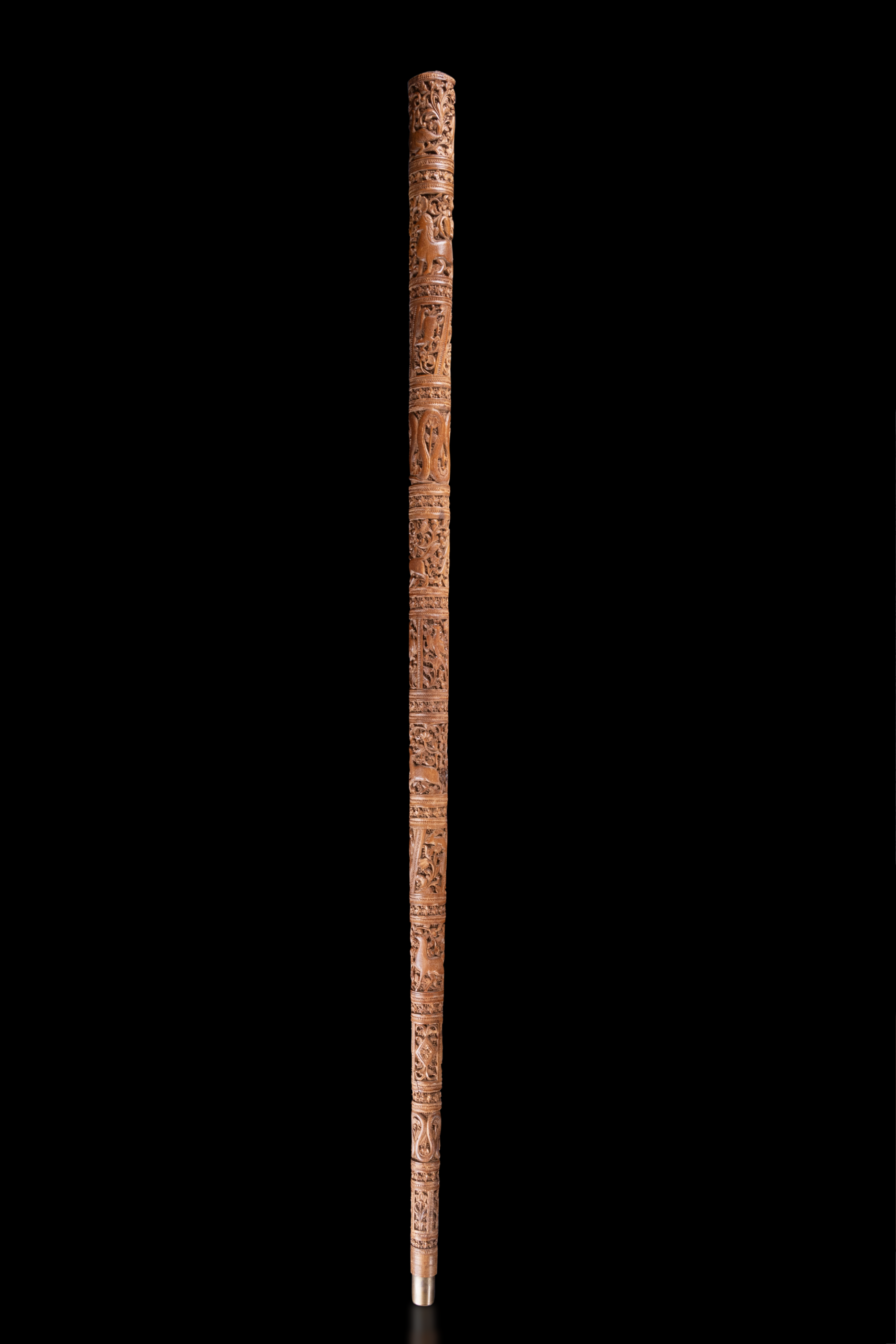
REGISTERED ANTIQUITY - NON-EXPORTABLE ITEM. Object Detail An elegant sandalwood walking stick. Cylindrical in form, proportionally long, and tapering slightly toward the base. The lower end is reinforced with a metal ferrule (probably brass or copper alloy) to ...read more

REGISTERED ANTIQUITY - NON-EXPORTABLE ITEM. Object Detail This silver ewer was made in Burma (present day – Myanmar)— most likely in Mandalay or Rangoon — between 1880 and 1900 CE. It has an influence of the Konbaung dynasty. ...read more
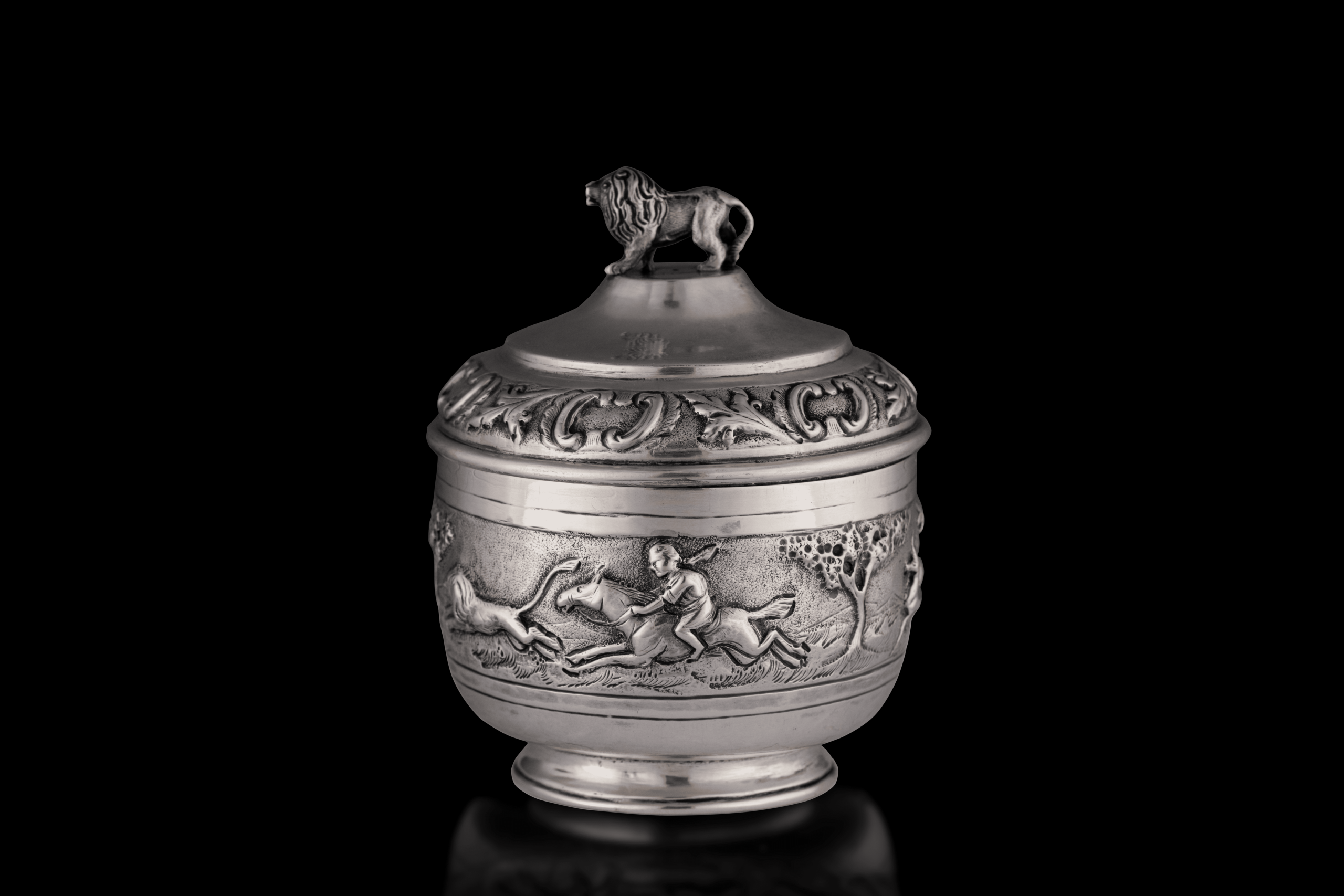
REGISTERED ANTIQUITY - NON-EXPORTABLE ITEM. Object Details This silverware was likely produced in early 19th-century Calcutta. The Lion finial on top attracts the viewer’s eye. The lion appears victorious, alert, and progressing. Lion is a symbol of power ...read more

NON-EXPORTABLE ITEM. Object Detail It is a South Indian ritual bell (in Sanskrit, a ghanta or ghanti), made of bronze, used in Hindu devotional and temple practice. The bell is crowned by a sculptural representation of Nandi, the ...read more
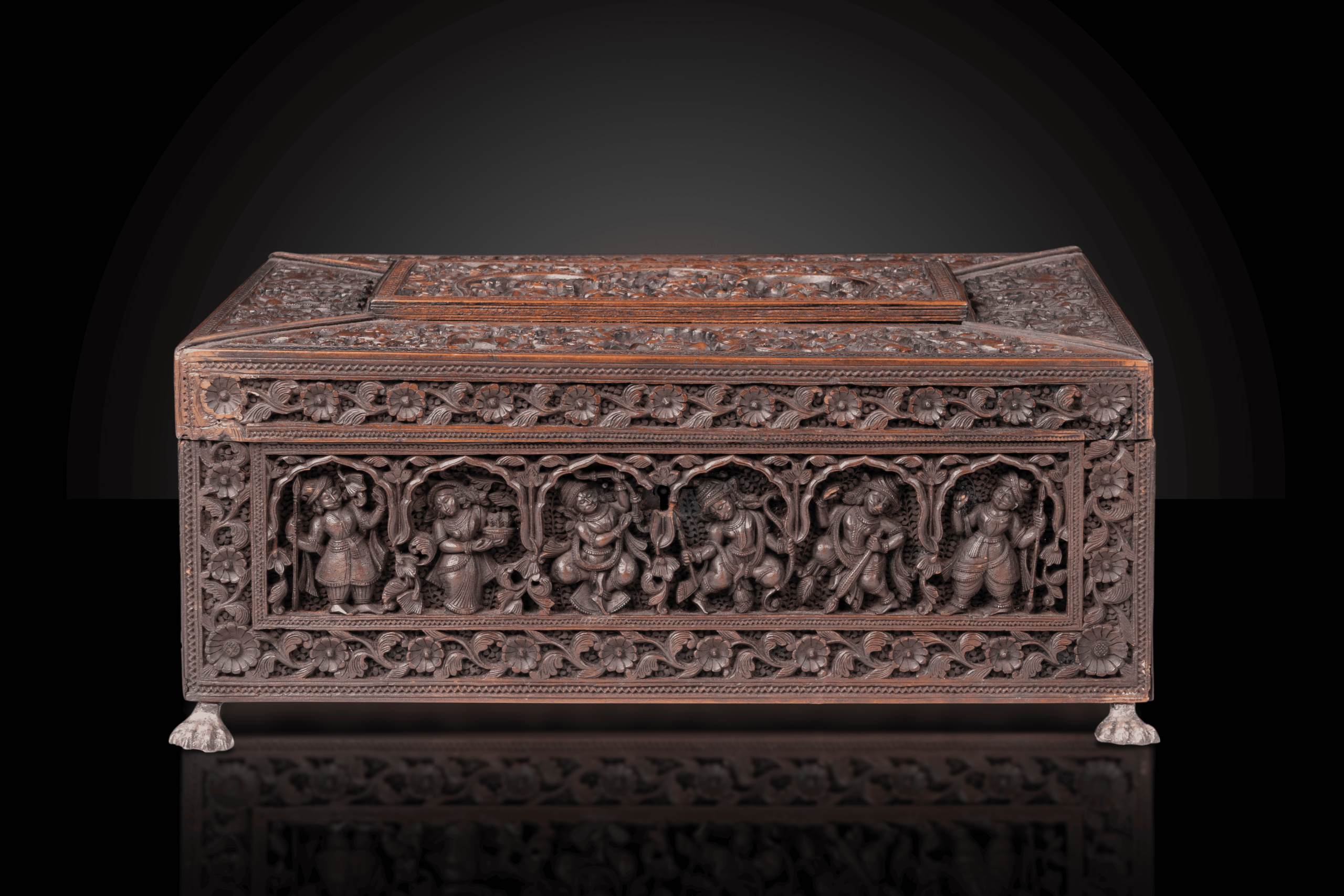
REGISTERED ANTIQUITY - NON-EXPORTABLE ITEM. Object Detail This rectangular sandalwood casket form is elegant yet functional, with a detachable, slightly tapered lid that enhances its visual appeal. The lid is carefully divided into five sections. At the centre ...read more
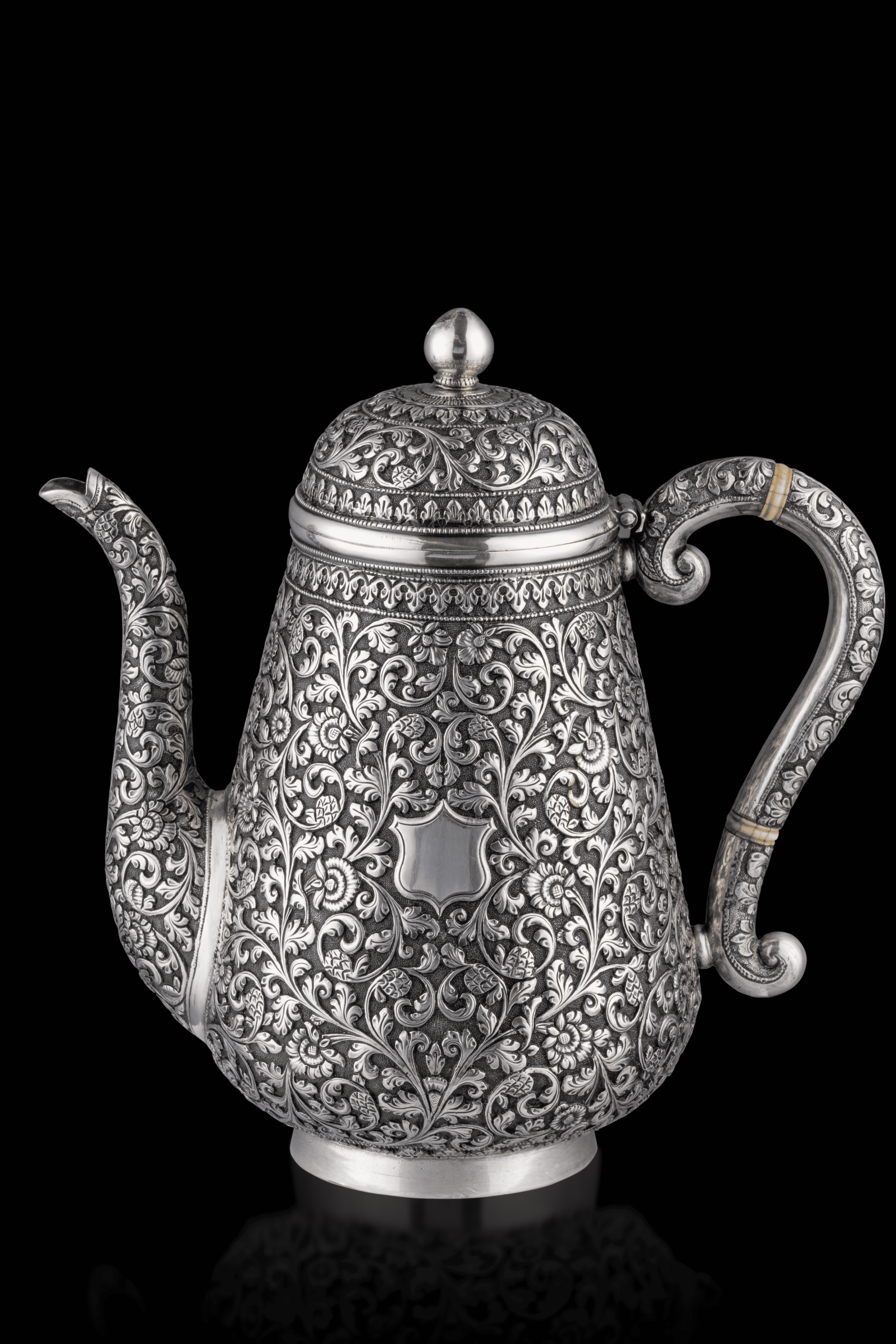
REGISTERED ANTIQUITY - NON-EXPORTABLE ITEM. Object Detail This silver teapot was produced in the 19th century, Kutch, colonial India. Repoussé and chasing techniques were used to shape this teapot. This teapot was possibly part of a larger set ...read more


