

Request More Images
You can find images of this object above. Click on an image to zoom.
In case you are looking for additional images, please email us at ritesh@indikeauctions.com or use the request form below.


REGISTERED ANTIQUITY – NON-EXPORTABLE ITEM.
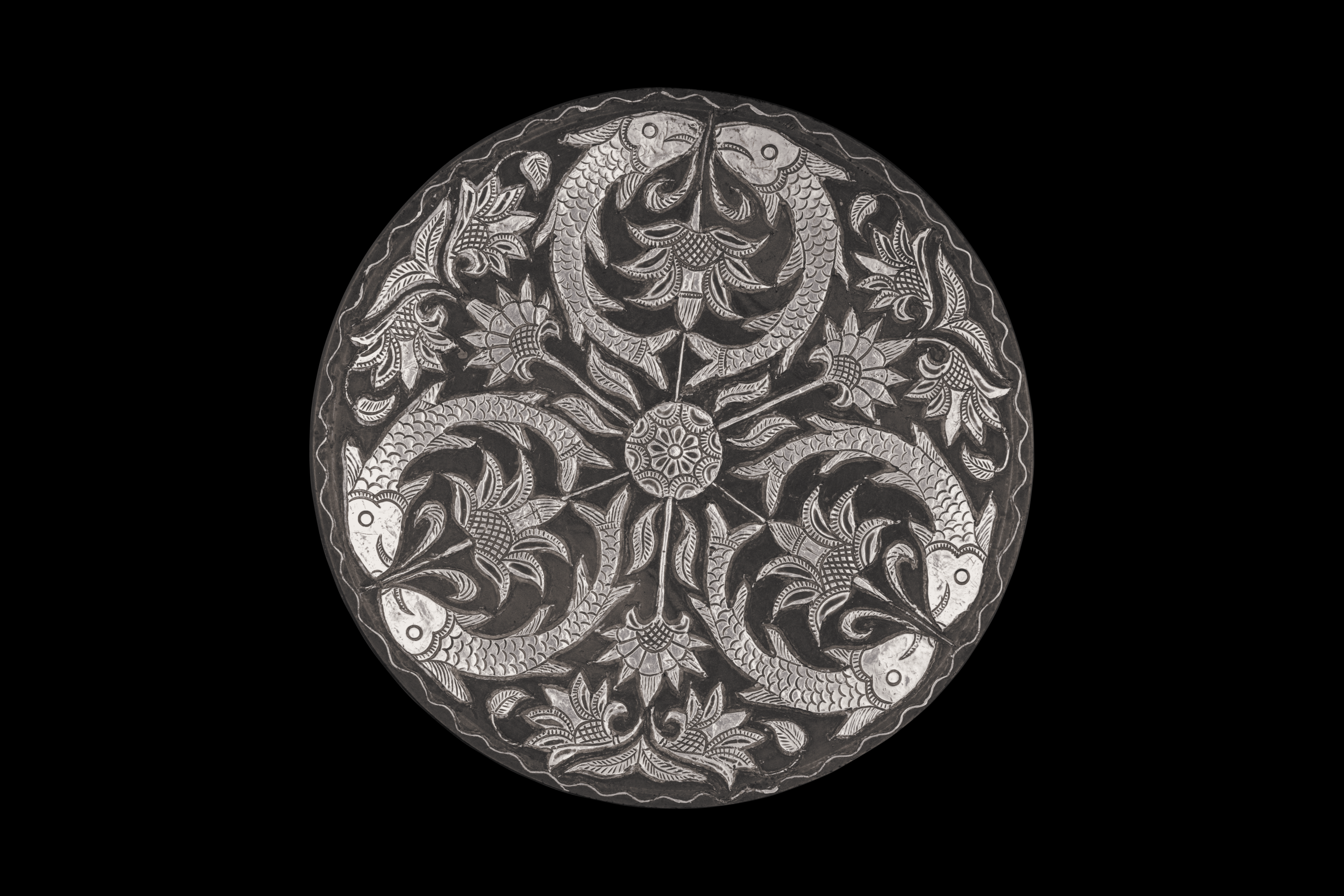
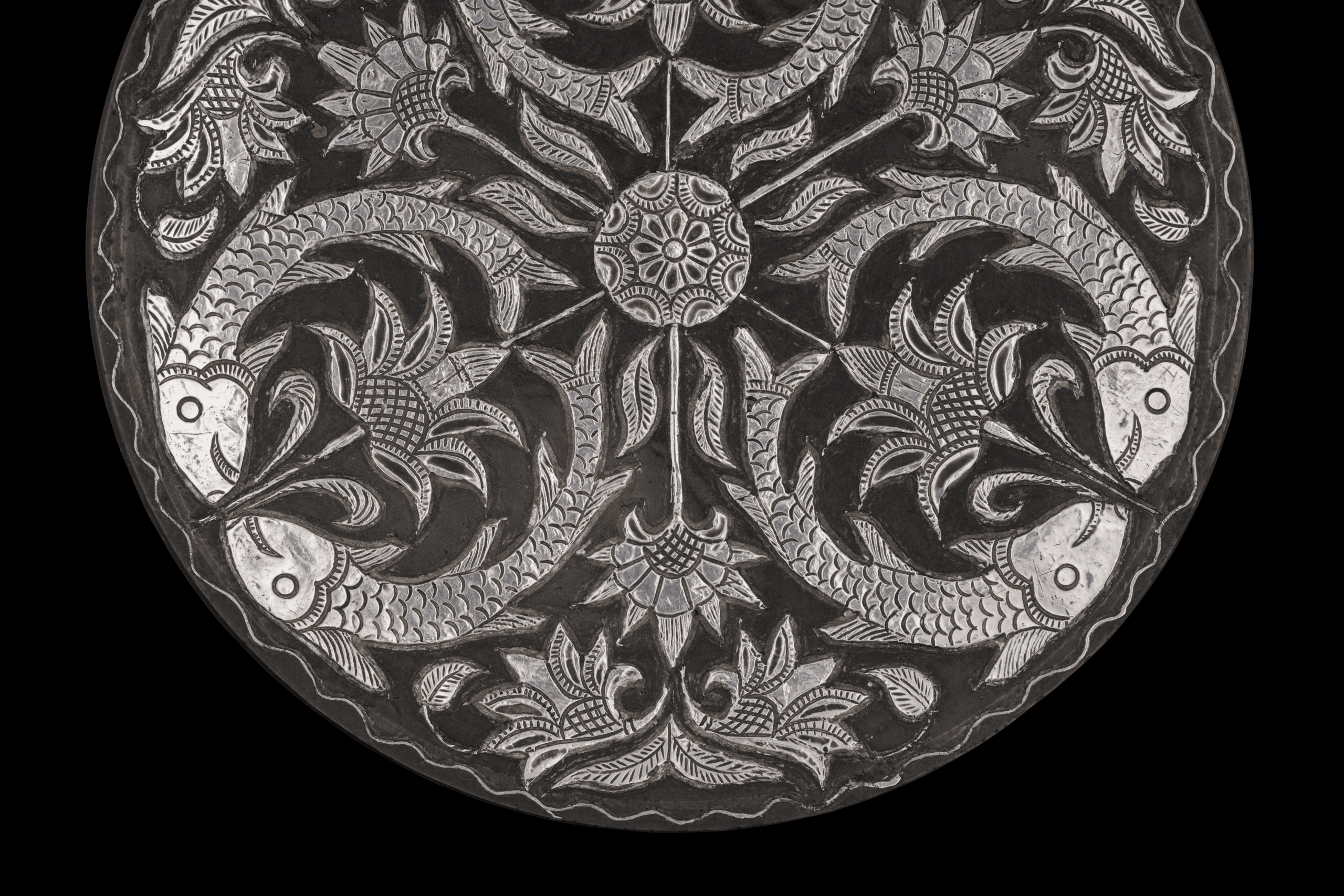
A silver-inlaid bidri plate, Lucknow, North India, of circular form, finely inlaid with smiling, swimming fish and leafy branches, the surface dotted with raised points. This Plate with Emblematic Pairs of Fish (mahi-ye maratib), Lucknow, Awadh, Uttar Pradesh, circa 1880, is of Zarbuland technique.
Considered a style of metalwork, bidri wares typically have silver or brass inlays against a dark, zinc-based alloy. The plate is rendered using the Zarbuland technique, common in Lucknow, which actually results in the inlaid metals standing scarcely above the surface and giving a bold and quite raised effect.
It displays a pair of fish, the traditional ‘mahi-ye maratib’, or Fish of Dignity, symbolic of high rank and conferred by Mughal emperors. These are encircled by florid motifs with flowers, vines, and foliage, which reflect the fine skill that unites the Islamic and Mughal artistic traditions. Such ornamentation in silver stands out from the dark and blackened base of the metal to reveal the engraver’s and inlayer’s exactitude. The work reflects both the luxury of courtly culture and the skilful adaptation of functional metalware into ornamental art.
The primary decoration on this bidri ware plate is a pair of fish arranged head-to-head with their curved bodies forming a circle. Known as the mahi-ye maratib (Fish of Dignity), it was an insignia of exalted rank that the Mughal emperors and earlier Middle Eastern rulers bestowed upon their subordinate chieftains in recognition of valorous military service. In 1720, it was awarded by the Mughal Emperor Muhammad Shah (reign 1719–1748) to Saadat Khan, the Governor of Agra (Akbarabad), who soon became the Governor of Lucknow from 1722 to 1739.
The fish emblem subsequently served as the dynastic leitmotif of the Lucknow court and was frequently displayed on its decorative arts and palatial architecture. It was represented in state processions as a fish and two gilt globes carried on a standard. A heraldic form consisting of a pair of honorific mermaids bearing a crown and flanking a shield was used as the personal coat of arms of King Wajid Ali Shah (r. 1847–56). Bidri ware is made from a predominantly zinc-based alloy, along with smaller amounts of lead, copper, and/or tin. The ornamentation of bidri-ware from the Deccan and eastern India typically features inlaid silver sheet or wire designs, which are rendered, flush and burnished. Lucknow bidri ware is distinctive in that it is often executed in bold relief (Zarbuland technique), in which the inlaid metals are allowed to remain protruding slightly above the surface and are then adorned with sheet overlay and incised motifs.
From a Private Collection in Mumbai, India.
Good condition with minor wear.
Diameter – 15 cm.
1. Los Angeles County Museum of Art, Plate with Emblematic pairs of fish (mahi – ye – maratib), Awadh, Lucknow, Uttar Pradesh, India. https://collections.lacma.org/node/203887
2. Chahar Gulshan, book 2, British Library manuscript, Or. 1791, fol. 88. The text is a history of India written in Persian in 1759 but apparently compiled in c. 1720. This brief history of a survey of Mughal provinces is the earliest known account of bidri ware. Quoted and discussed in Susan Stronge “Metalwork: Bidri Ware,” in Islamic Heritage of the Deccan, George Michell, ed., Bombay, Marg Publications, 1986, p. 111; and Susan Stronge, Bidri Ware: Inlaid Metalwork from India, London, Victoria and Albert Museum, 1985, pp. 15-16.
https://www.academia.edu/4034822/Bidri_ware_in_LACMA_Lyric_Patterns
3. Bidri ware [in LACMA]: Lyric Patterns,Stephen Markel 1992, Golconda and Hyderabad, pp. 45-56. Edited by S. Safrani. Bombay: Marg Publications, 1992.
https://www.academia.edu/4034822/Bidri_ware_in_LACMA_Lyric_Patterns
4. The technical examination of bidri ware, August 1987. Studies in Conservation 32(3):97-101, Author: Susan La Niece, Published by British Museum.
https://www.researchgate.net/publication/320044637_The_technical_examination_of_bidri_ware
5. Salar Jung Museum, 200 pieces of Bidriware objects at display. https://www.salarjungmuseum.in/Bidri-ware.html
6. Bidriware from various parts of India in the collection of Jagdish and Kamla Mittal Museum of Indian Art https://www.mittalmuseum.com/metalware/
You can find images of this object above. Click on an image to zoom.
In case you are looking for additional images, please email us at ritesh@indikeauctions.com or use the request form below.
Buying at Indike is simple. Our friendly team of experts are always willing to discuss items entered in the auctions and also those that are currently available in our online shop with potential purchaser. All members of our dedicated team are here to help should you need any assistance. Please note that all items purchased are subject to our standard terms and conditions.

Bid live on our website, without additional online surcharges!

Bids are open until the window closes. Highest bid wins.
By accessing or using this website, mobile application, or any services provided by Indike, you acknowledge and agree to comply with the following terms and conditions. These terms govern your use of our platform and all content, features, and functionality made available through it. Use of this site is conditioned upon your acceptance of and compliance with these terms. If you do not agree with any part of the terms, you must not use the website or services.
All content provided on this site, including but not limited to text, graphics, logos, images, and software, is the property of Indike or its licensors and is protected by intellectual property laws. Unauthorized use, reproduction, or distribution of any content is strictly prohibited.
The information provided on this website is for general informational purposes only and may be subject to change at any time without notice. We do not warrant the accuracy, completeness, or reliability of any content on the site. Any reliance you place on such information is strictly at your own risk.
We reserve the right to suspend or terminate your access to the website without notice, for conduct that we believe violates these terms or is harmful to other users, us, or third parties, or for any other reason at our sole discretion.
You may not use this website in any way that causes, or may cause, damage to the website or impairment of its availability or accessibility. You may not use it for any unlawful, illegal, fraudulent, or harmful purpose or activity.
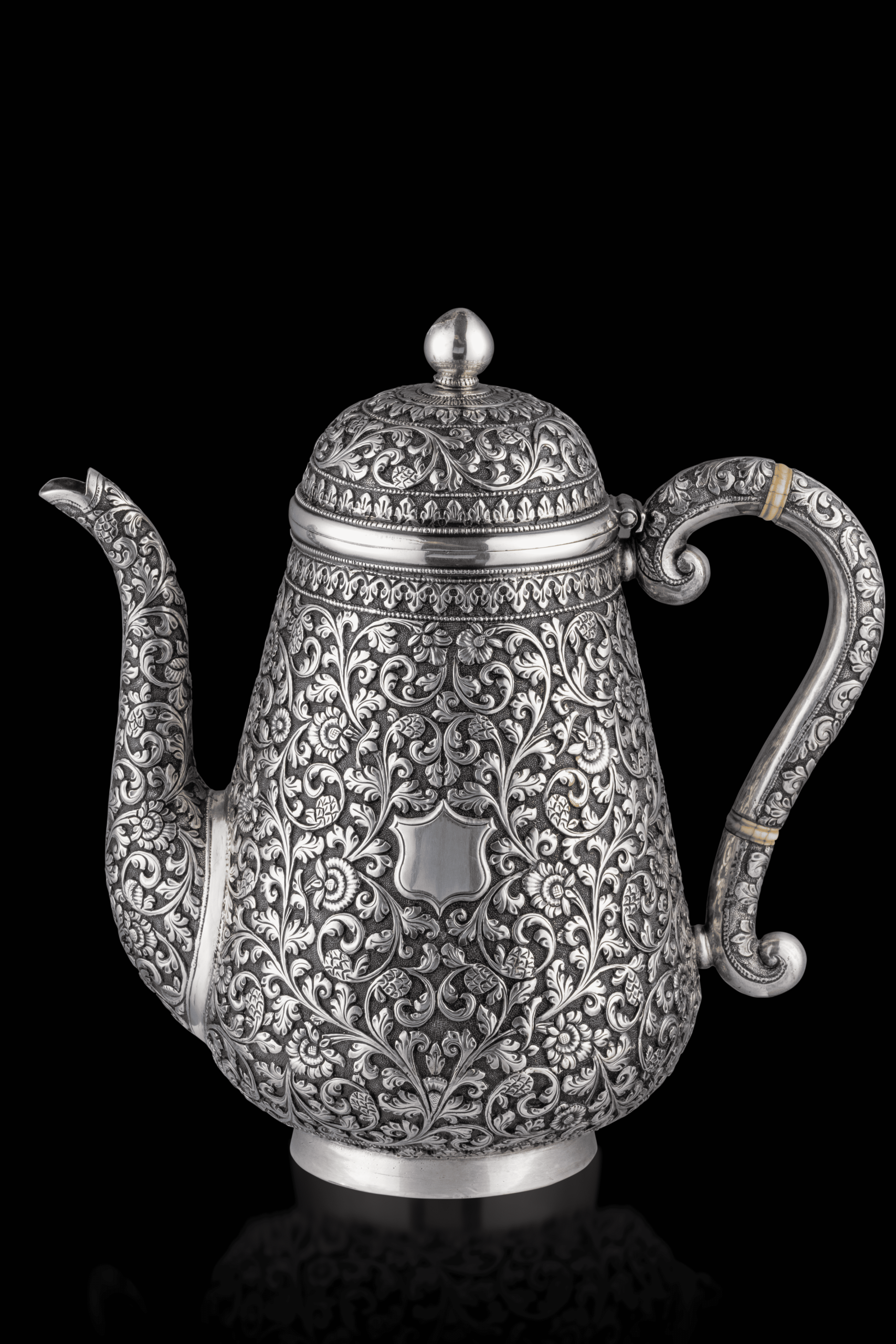
REGISTERED ANTIQUITY - NON-EXPORTABLE ITEM. Object Detail This silver teapot was produced in the 19th century, Kutch, colonial India. Repoussé and chasing techniques were used to shape this teapot. This teapot was possibly part of a larger set ...read more
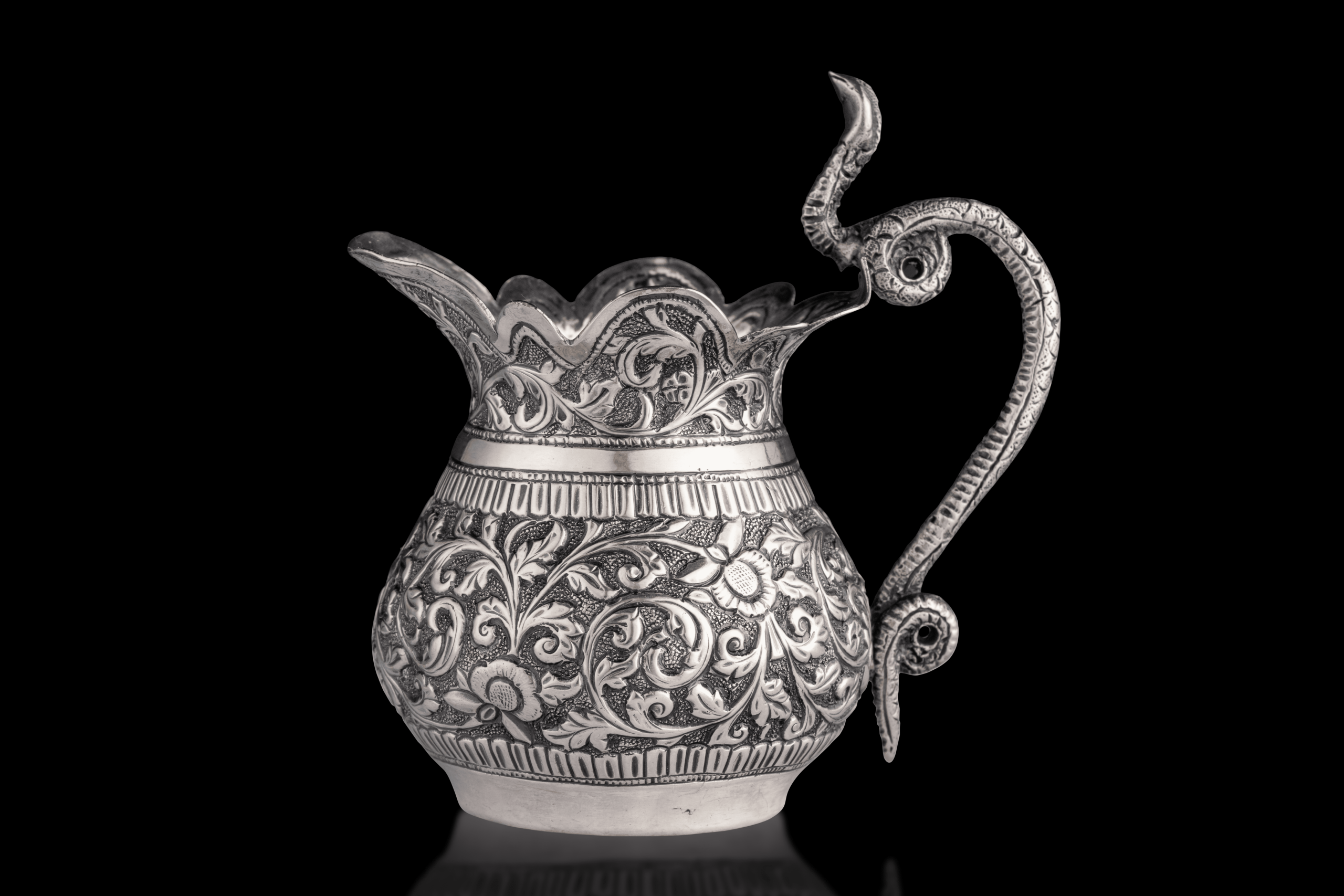
REGISTERED ANTIQUITY - NON-EXPORTABLE ITEM. Object Detail This particular silver milk strainer from Kutch is an exquisite example of colonial-era craftsmanship, blending utility with ornate artistry. Its overall form is bulbous at the base and gently tapering towards ...read more
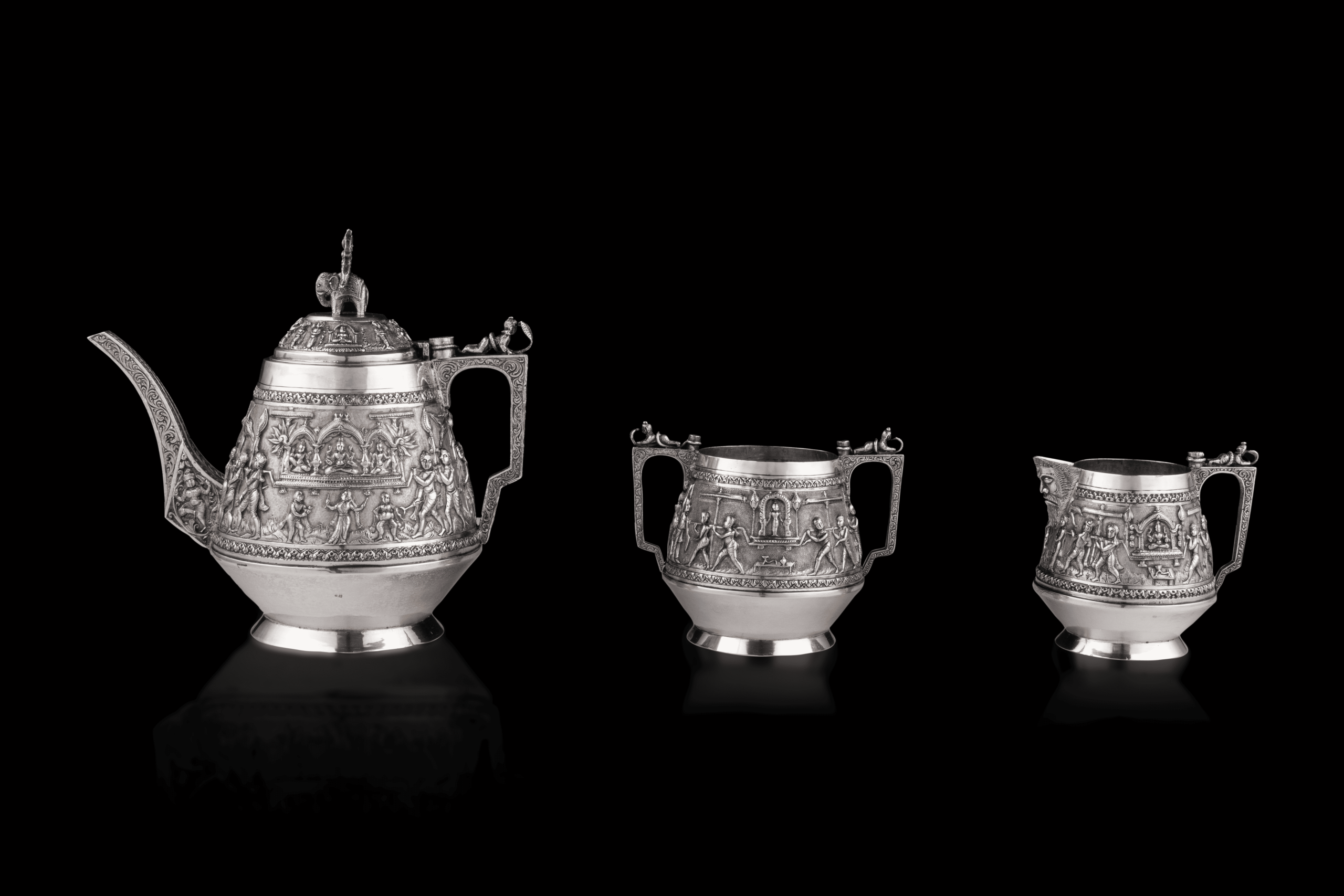
REGISTERED ANTIQUITY - NON-EXPORTABLE ITEM. Object Detail This 19th-century Indian Colonial solid silver antique three-piece tea set consists of a teapot, sugar bowl, and a cream jug. Each object features a straight tapered body richly and exquisitely repoussé, ...read more
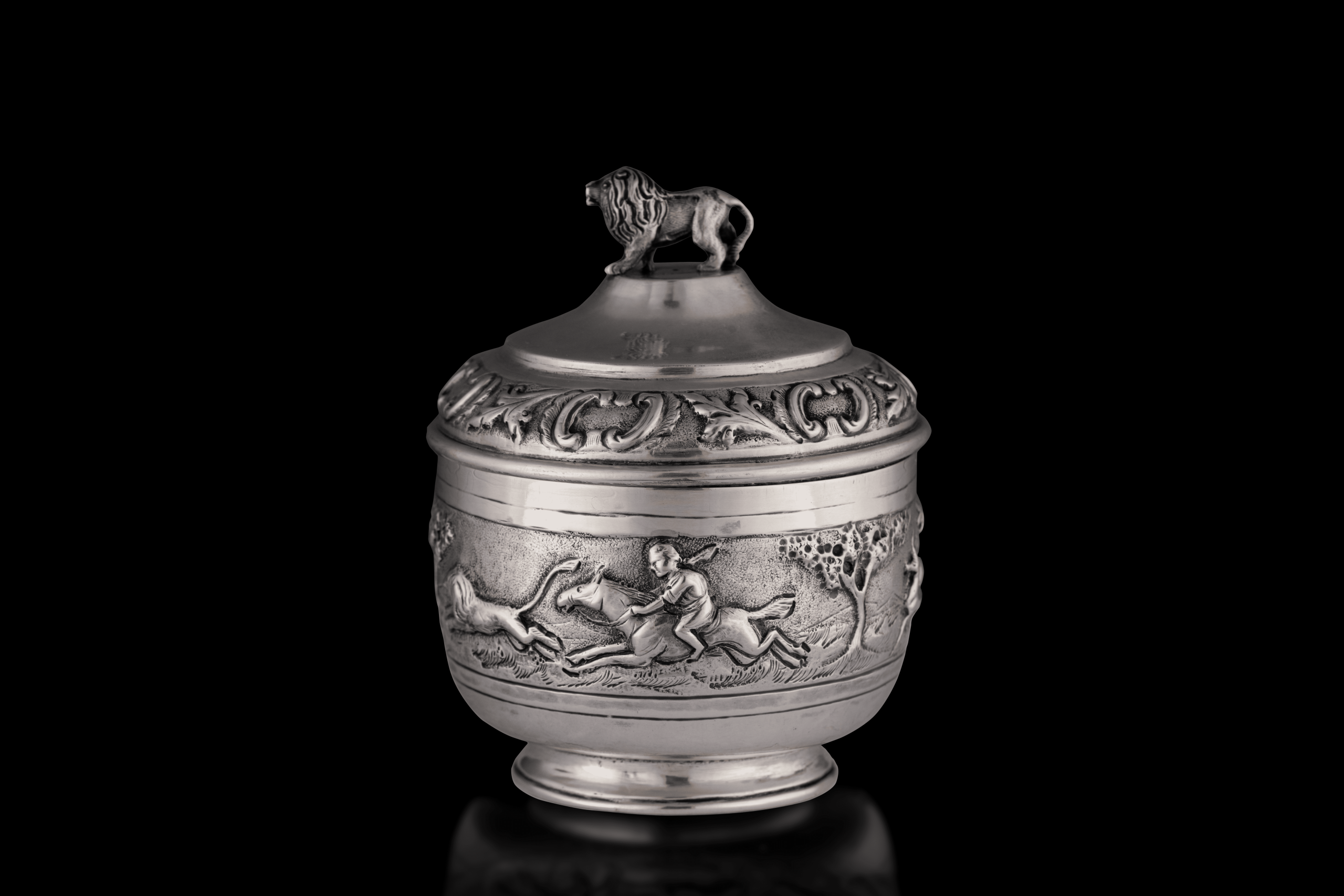
REGISTERED ANTIQUITY - NON-EXPORTABLE ITEM. Object Details This silverware was likely produced in early 19th-century Calcutta. The Lion finial on top attracts the viewer’s eye. The lion appears victorious, alert, and progressing. Lion is a symbol of power ...read more
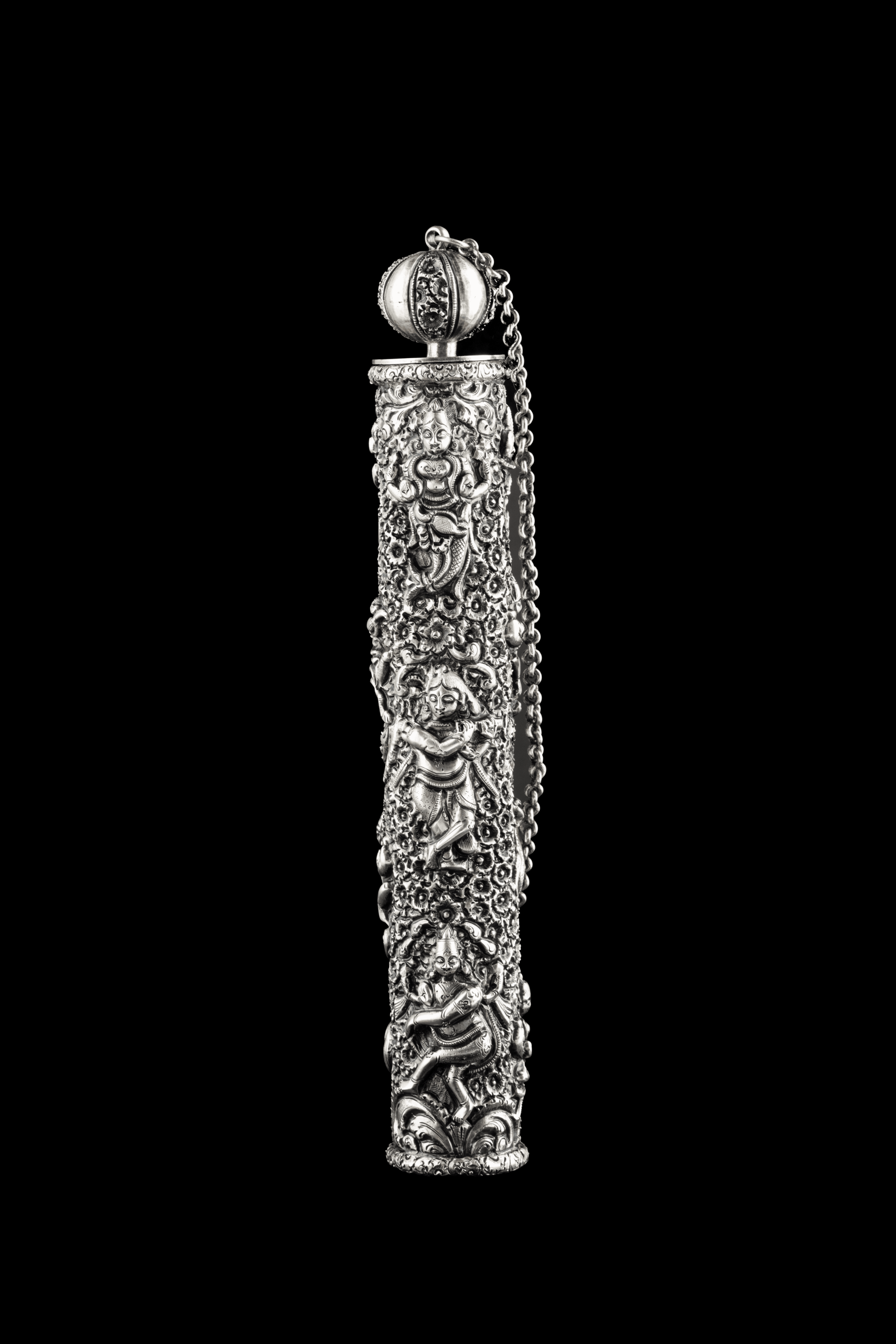
REGISTERED ANTIQUITY - NON-EXPORTABLE ITEM. Object Detail This silver tinder tube was likely produced in 19th-century Trichinopoly, Madras. This tinder tube was designed to light fuses in cannons. The body of the tube features some the avatars of ...read more

REGISTERED ANTIQUITY - NON-EXPORTABLE ITEM. Object Detail The object’s form—a large, four-sided cheroot or matchbox case with a hinged cap in Chinoiserie style, a European decorative style that flourished in the 17th and 18th centuries. Derived from ...read more
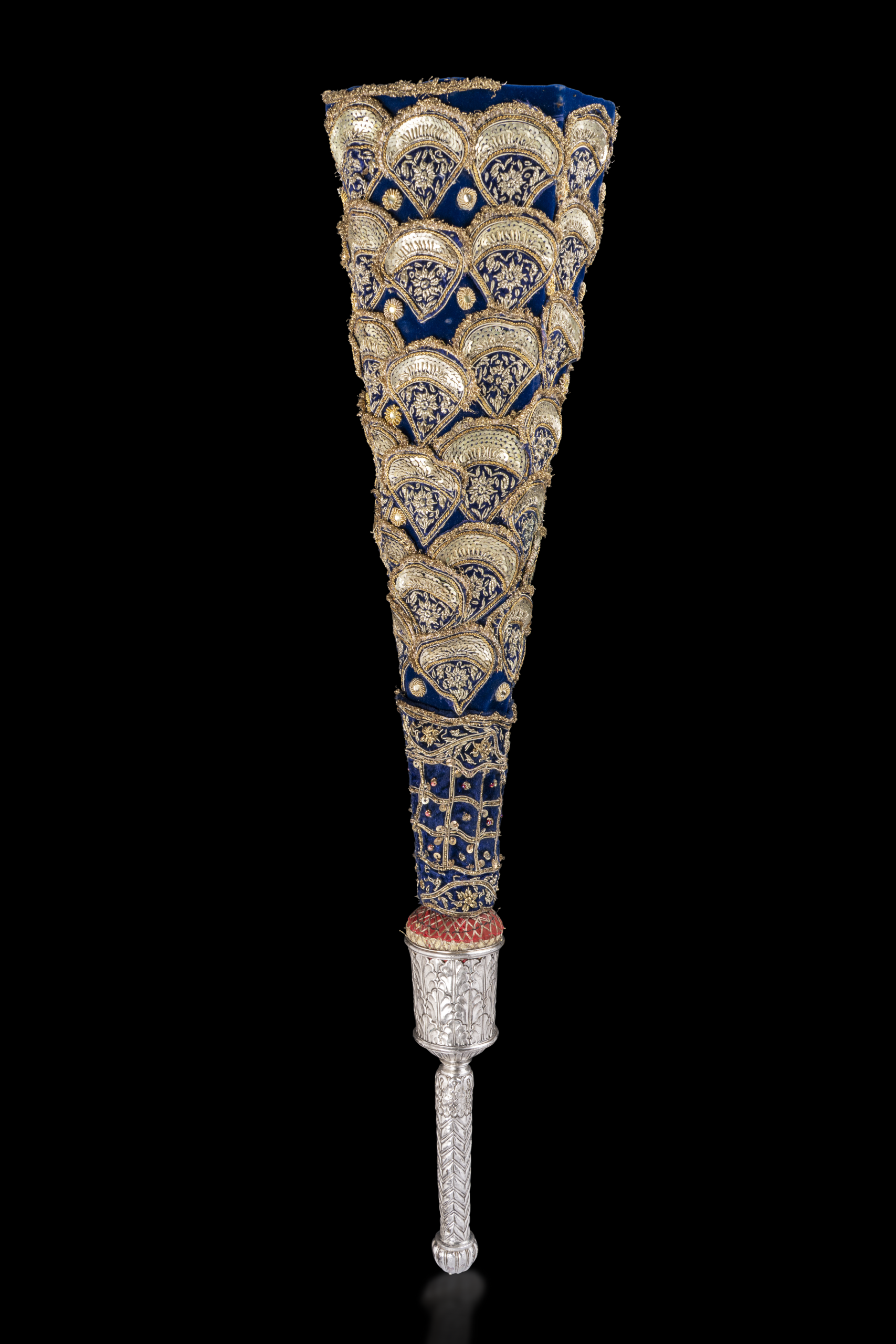
REGISTERED ANTIQUITY - NON-EXPORTABLE ITEM. Object Detail Fly whisks are commonly referred as Chamara or Chauri. This exquisite Chauri is masterfully adorned with intricate zardosi work, showcasing embellishments that beautifully emulate the vibrant appearance of peacock feathers. The ...read more
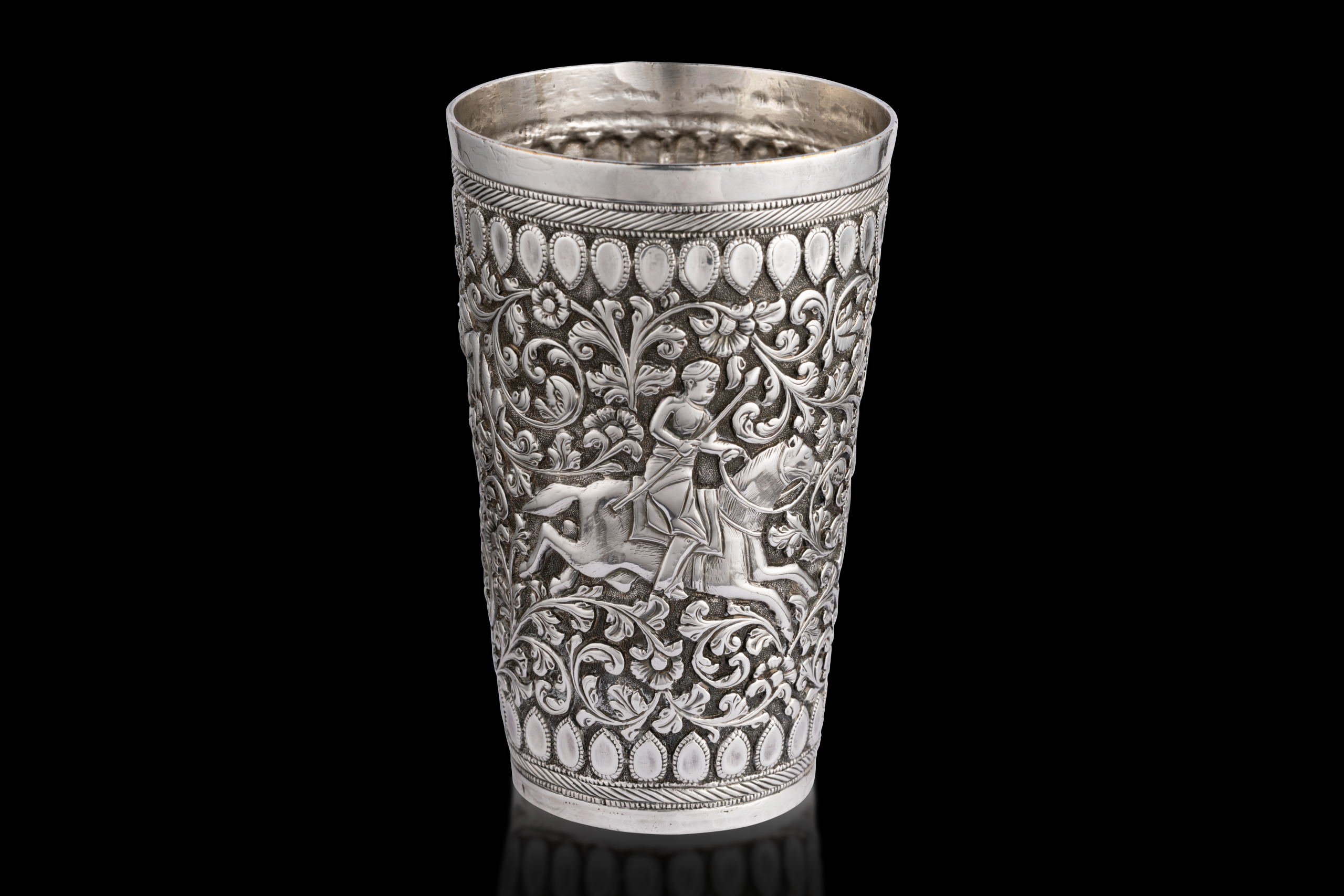
REGISTERED ANTIQUITY - NON-EXPORTABLE ITEM. Object Detail The silver beaker, with its tapering cylindrical body that gently widens toward the rim, presents a graceful silhouette anchored by a plain, narrower base that ensures balance. Produced in Kutch during ...read more


