

 Click for high resolution

Request More Images
You can find images of this object above. Click on an image to zoom.
In case you are looking for additional images, please email us at ritesh@indikeauctions.com or use the request form below.


REGISTERED ANTIQUITY – NON-EXPORTABLE ITEM.
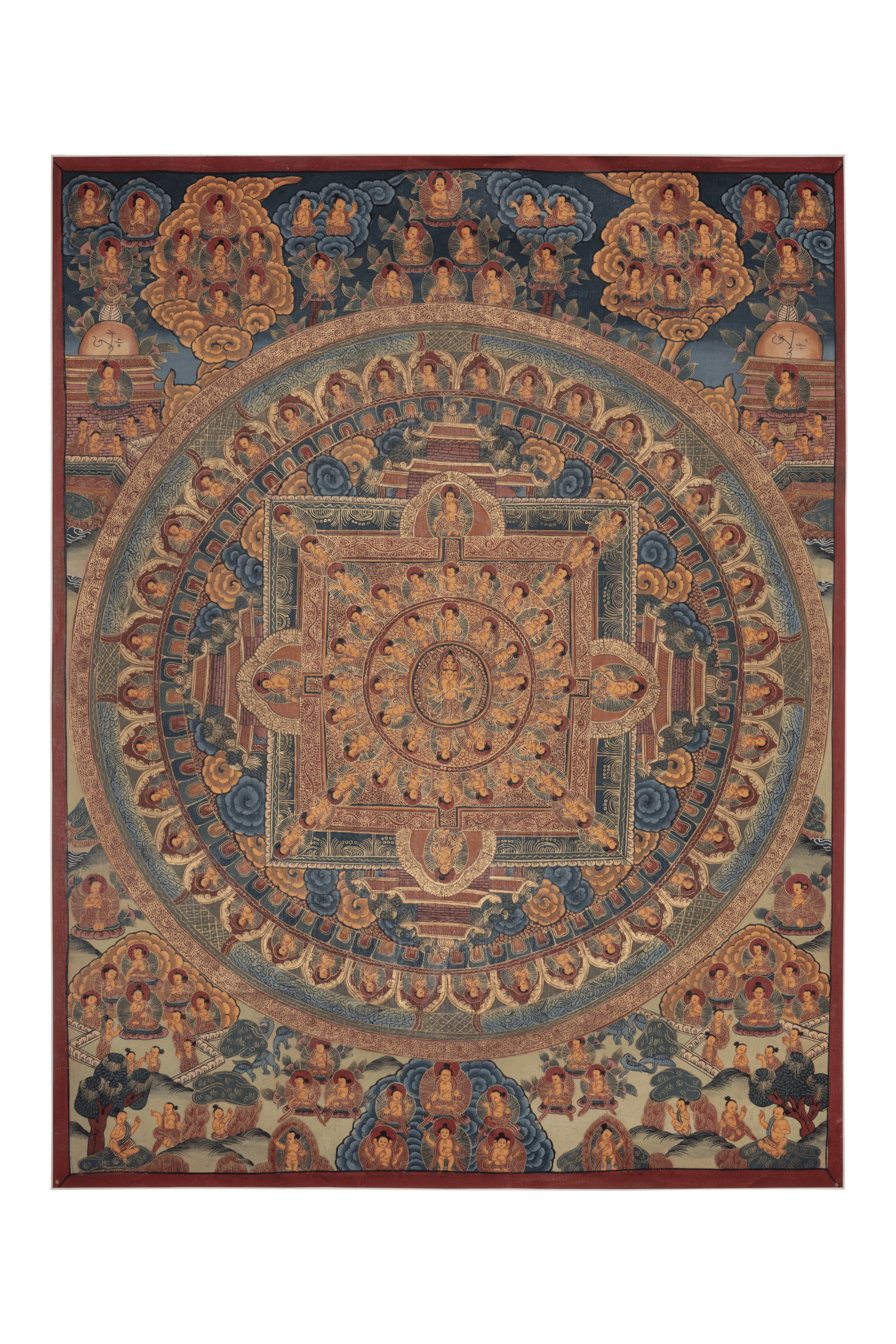
Buddhism became predominant in Tibet in the 6th century. From the 7th century onwards, a corresponding development in art also took place. This Thangka illustrates the Mandala of the Avalokiteshvara who is regarded as a Bodhisattva—an enlightened being who chooses to delay their attainment of Buddhahood to guide humanity.
The composition showcases a beautifully crafted classic mandala, characterised by a circular cakra nestled within an elegant square enclosure. At the heart of this intricate painting, one finds a striking illustration of Avalokiteshvara, the renowned eleven-headed deity, also known as Ekadasamukha. This focal placement in the centre signifies the enlightened and perfected realm of Potalaka, a mystical mountain. His eleven heads represent the Dasabhumis, or ten levels of enlightenment. The Buddha Amitabha (one of the dhyani Buddhas) is represented by the eleventh head, which stands out above the rest. Two medallions encircle the centre deity, and within those circles, the other buddhas are seated.
The mandala has 3 Buddhas, each in a corner of the square, lining up on a diagonal axis. Outside those circles are the four gates (at the cardinal directions), each represented by an ornate temple portal filled with smaller Buddhas in niches. Over each gate, a multi‑storied golden shrine rises, and we see Buddha figures enshrined on each level. Outside the square, the larger medallion opens with small sitting Buddhas in circular form. Scattered in the uppermost background are assemblages of Buddhas and Bodhisattvas in clouds.
The top corners each have a stupa surmounted by a Buddha figure, and Tibetan syllables, “Om”, inscribed on the dome. The Thangka is filled with the miniature images of Buddha and bodhisattvas, all in different postures, mudras and attitudes, but all in seated position, defining the form of enlightenment, purity.
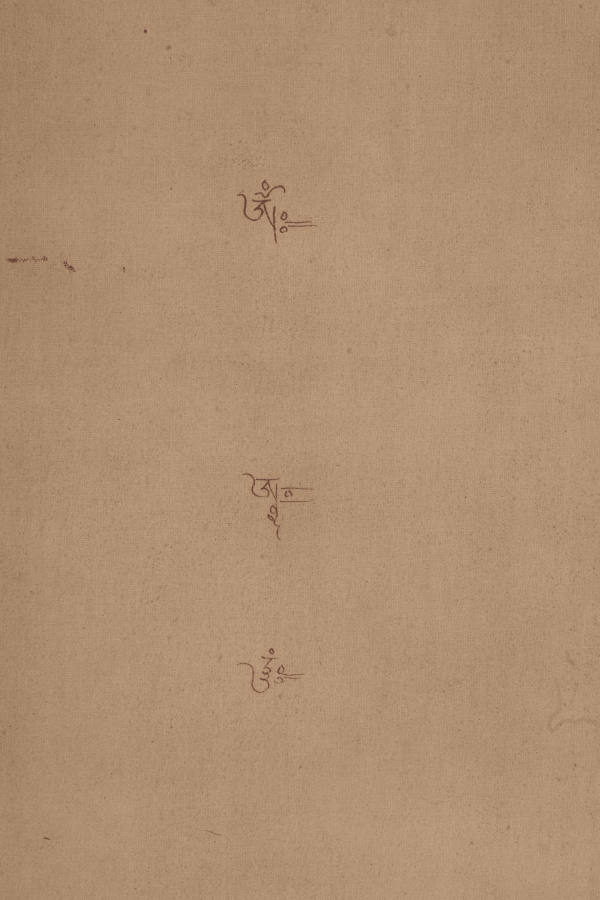
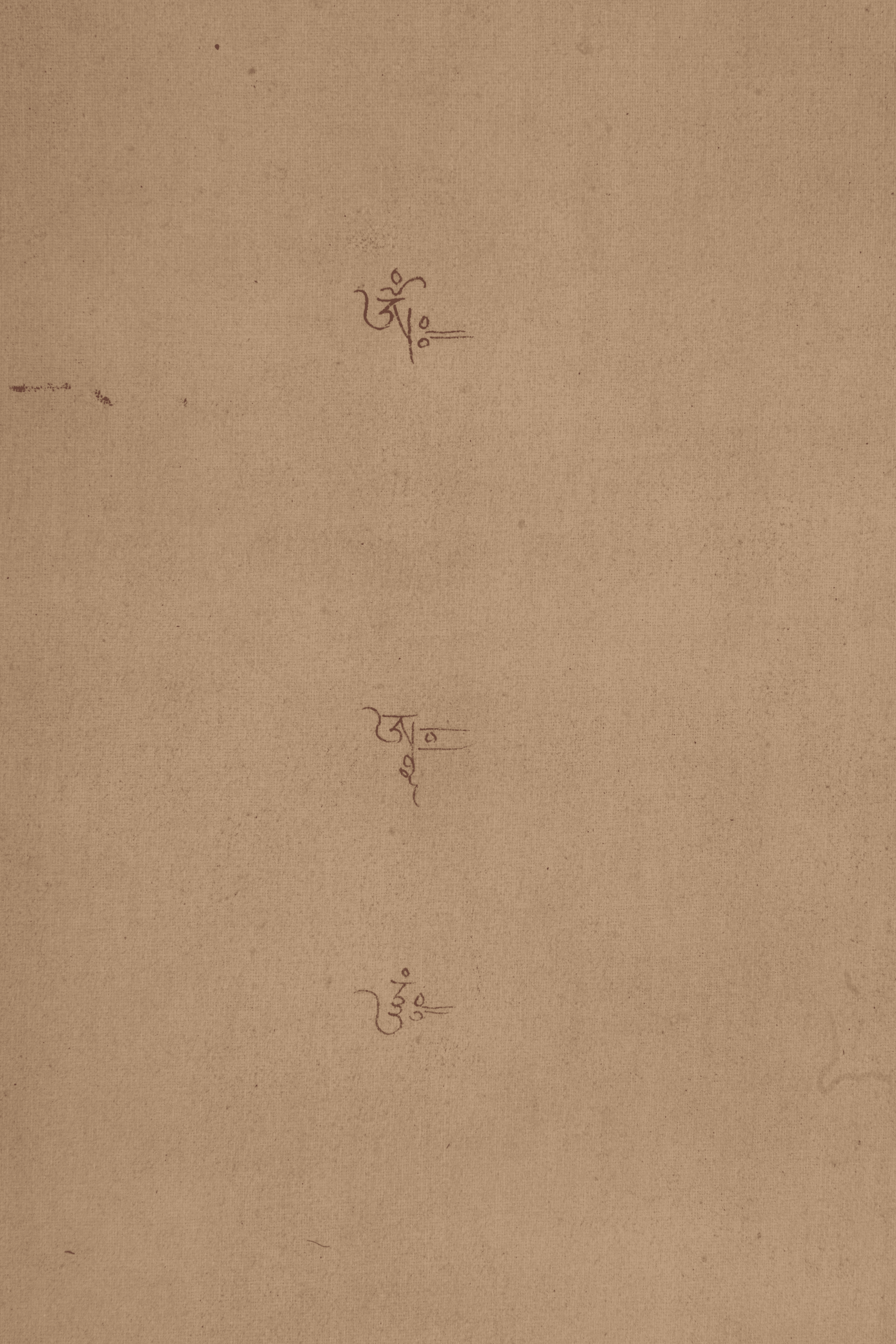
On the reverse of the painting, the Bhoti script of the Tibetan language, with three syllables, from top to bottom, starts with “OM AH HUM”, the holy syllable of the Vajrayana tradition.
From a Private Collection in Mumbai, India.
Good Condition with minor wear.
56 x 43 cm
1.Sacred Arts of Tibet: Art from the Roof of the World, Educator Workshop presented by the Asian Art Museum, Chong-Moon Lee Center for Asian Art and Culture, April 21, 2001.
2.Chaya Chandrasekhar, “Mirrors of the Heart‑Mind – Ekadashamukha Avalokiteshvara Essay,” 13.6 years ago (Academia.edu, accessed August 2, 2025)
3.Himalayan Art Resources. Mandala of Eleven-Headed Avalokiteshvara (HAR 16). Rubin Museum of Art. Accessed August 3, 2025. https://www.himalayanart.org/items/16.
4.Chaya Chandrasekhar, “Mirrors of the Heart‑Mind – Ekadashamukha Avalokiteshvara Essay,” 13.6 years ago (Academia.edu, accessed August 2, 2025).
5.Huntington Archive of Buddhist and Asian Art. “Eka-Avalokiteshvara.” Sacred Arts of the Mission of Art, accessed August 2, 2025. https://huntingtonarchive.org/Exhibitions/sama/Essays/CC93.015EkaAva.html.
6.Lion’s Roar. Amitabha. Accessed August 2, 2025. lionsroar.com/buddhism/amitabha.
You can find images of this object above. Click on an image to zoom.
In case you are looking for additional images, please email us at ritesh@indikeauctions.com or use the request form below.
Buying at Indike is simple. Our friendly team of experts are always willing to discuss items entered in the auctions and also those that are currently available in our online shop with potential purchaser. All members of our dedicated team are here to help should you need any assistance. Please note that all items purchased are subject to our standard terms and conditions.

Bid live on our website, without additional online surcharges!

Bids are open until the window closes. Highest bid wins.
By accessing or using this website, mobile application, or any services provided by Indike, you acknowledge and agree to comply with the following terms and conditions. These terms govern your use of our platform and all content, features, and functionality made available through it. Use of this site is conditioned upon your acceptance of and compliance with these terms. If you do not agree with any part of the terms, you must not use the website or services.
All content provided on this site, including but not limited to text, graphics, logos, images, and software, is the property of Indike or its licensors and is protected by intellectual property laws. Unauthorized use, reproduction, or distribution of any content is strictly prohibited.
The information provided on this website is for general informational purposes only and may be subject to change at any time without notice. We do not warrant the accuracy, completeness, or reliability of any content on the site. Any reliance you place on such information is strictly at your own risk.
We reserve the right to suspend or terminate your access to the website without notice, for conduct that we believe violates these terms or is harmful to other users, us, or third parties, or for any other reason at our sole discretion.
You may not use this website in any way that causes, or may cause, damage to the website or impairment of its availability or accessibility. You may not use it for any unlawful, illegal, fraudulent, or harmful purpose or activity.
REGISTERED ANTIQUITY - NON-EXPORTABLE ITEM. Object Detail Fly whisks are commonly referred as Chamara or Chauri. This exquisite Chauri is masterfully adorned with intricate zardosi work, showcasing embellishments that beautifully emulate the vibrant appearance of peacock feathers. The ...read more
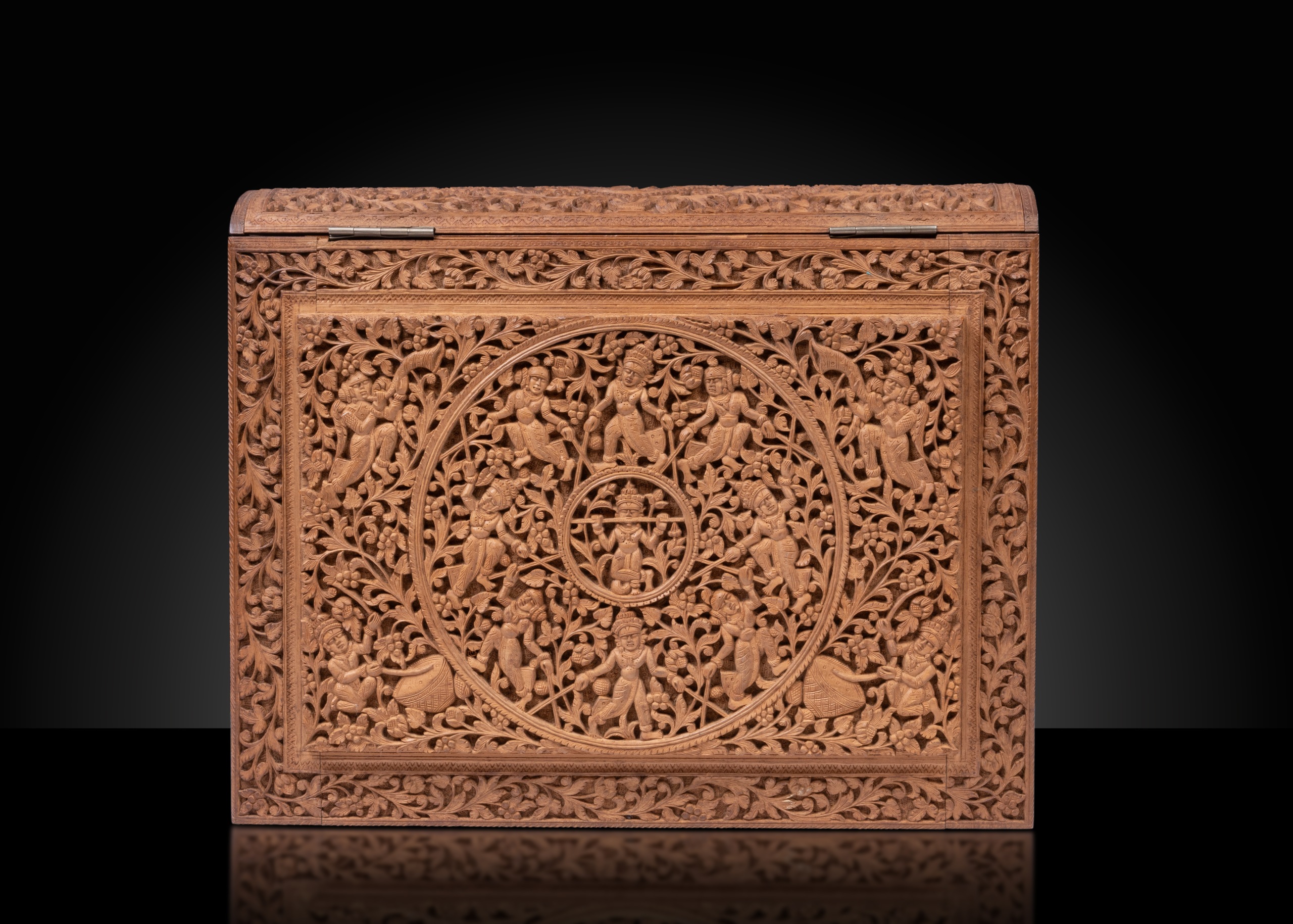
REGISTERED ANTIQUITY - NON-EXPORTABLE ITEM. Object Detail Wood has been masterfully shaped in a myriad of forms to cultivate the vibrant heritage of Gujarat. A remarkable piece dating back to the colonial era is a sandalwood photographic album. ...read more
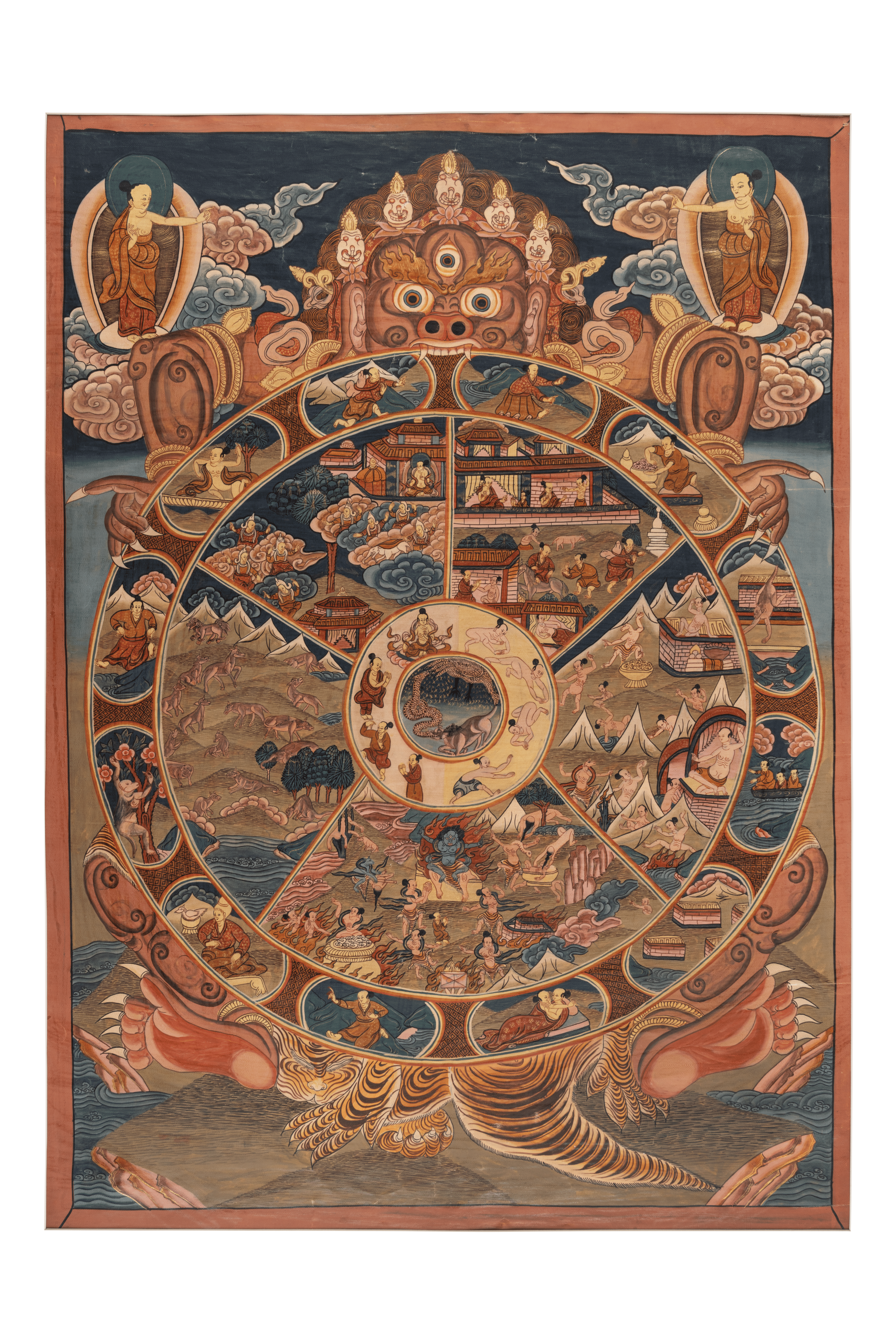
REGISTERED ANTIQUITY - NON-EXPORTABLE ITEM. Object Detail This Thangka depicts the Bhavachakra, which refers to the ‘Wheel of Life or Wheel of Samsara.’ The wheel of life painting graphically illustrates the Buddha’s teaching on impermanence, suffering, karma, death, ...read more
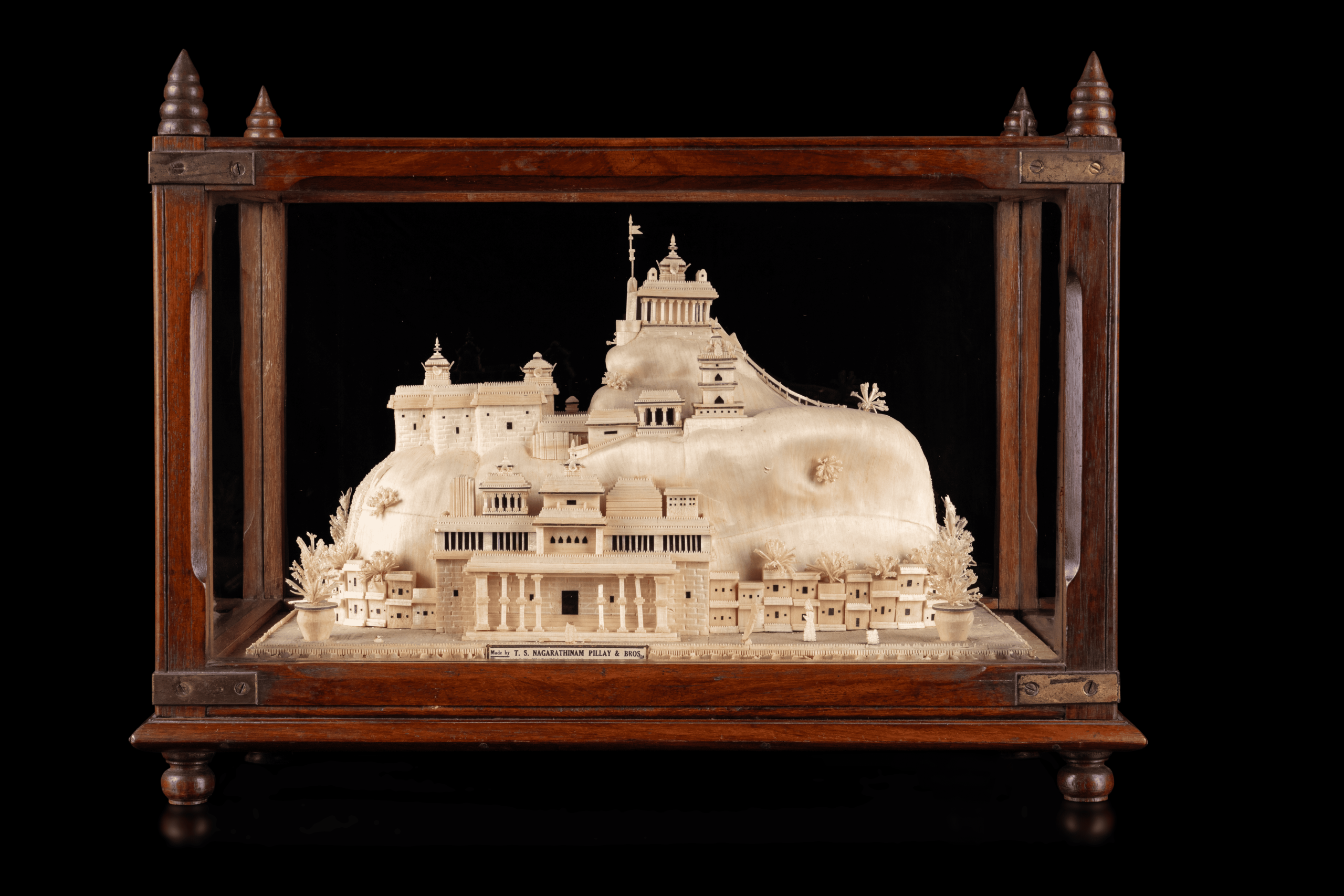
REGISTERED ANTIQUITY - NON-EXPORTABLE ITEM. Object Detail This is a miniature model of Tiruchirappalli Rock Fort in Tamil Nadu. It is made of pith (Indian cork or sola), is an ivory-like delicacy, lightweight nature and capacity for ...read more
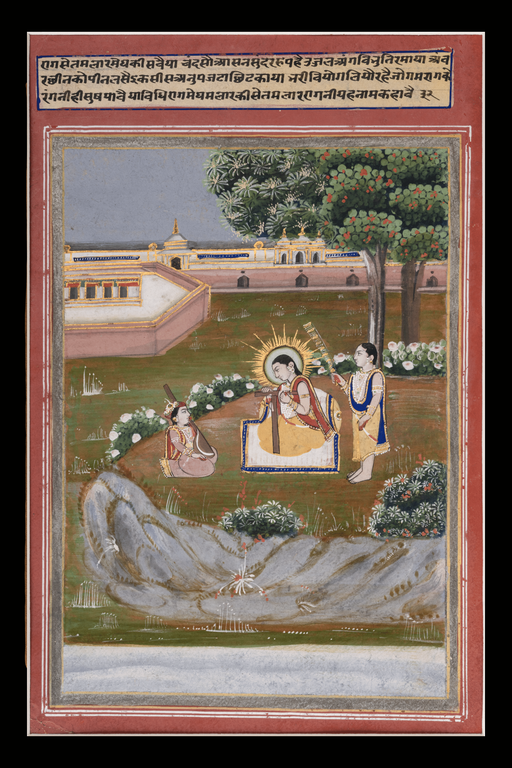
REGISTERED ANTIQUITY - NON-EXPORTABLE ITEM. Object Detail Rāgamālā paintings are a unique art form that visually represent Indian classical music. The Jaipur School of Art, which thrived in the 18th century, is well-known for its special style of ...read more

REGISTERED ANTIQUITY - NON-EXPORTABLE ITEM. Object Detail The object’s form—a large, four-sided cheroot or matchbox case with a hinged cap in Chinoiserie style, a European decorative style that flourished in the 17th and 18th centuries. Derived from ...read more
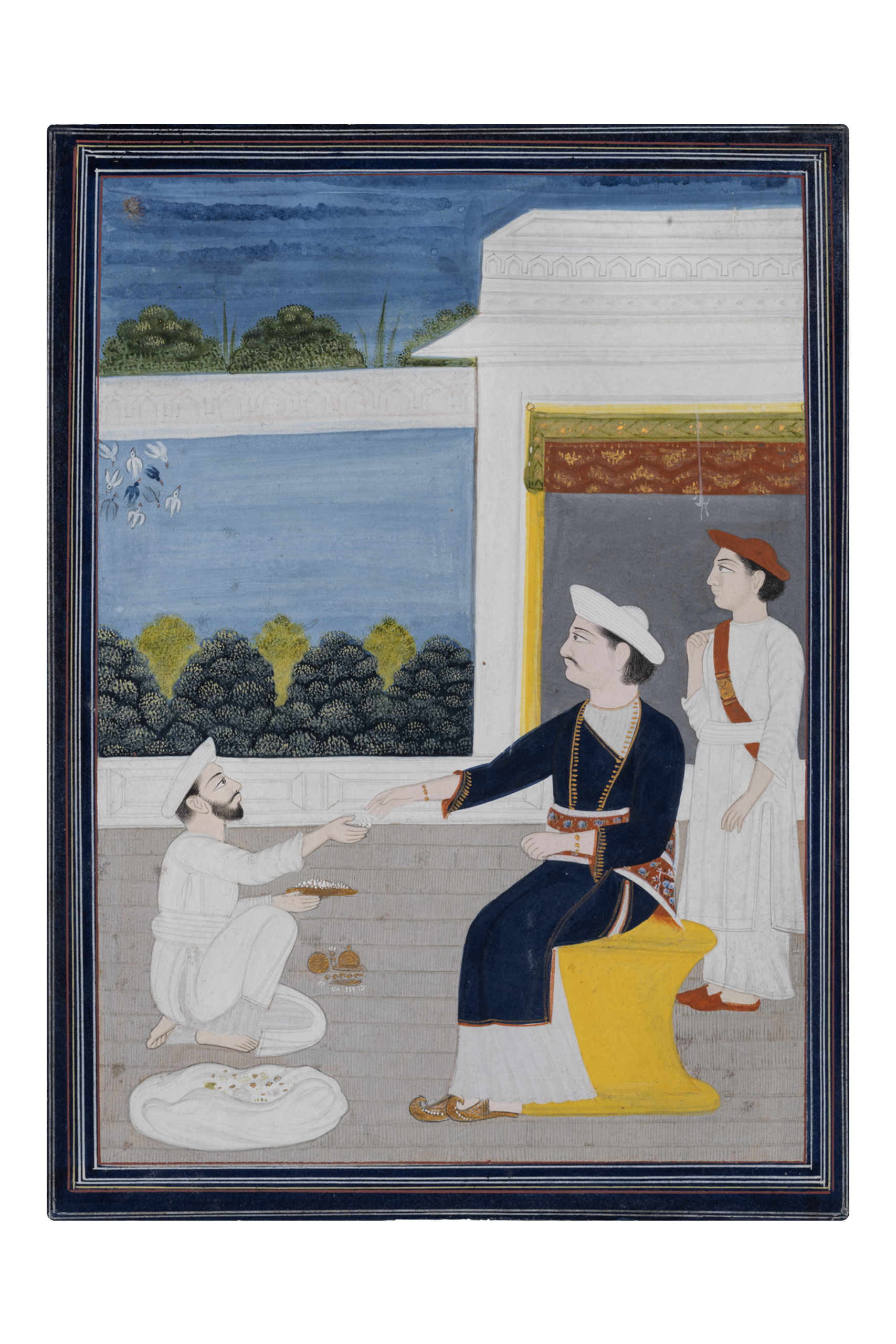
REGISTERED ANTIQUITY - NON-EXPORTABLE ITEM. Object Detail This early 18th-century Deccani miniature from the Hyderabad school portrays a royal figure seated on a bright yellow stool or gilded cushion, examining jewels offered by a tradesman. Before him kneels ...read more
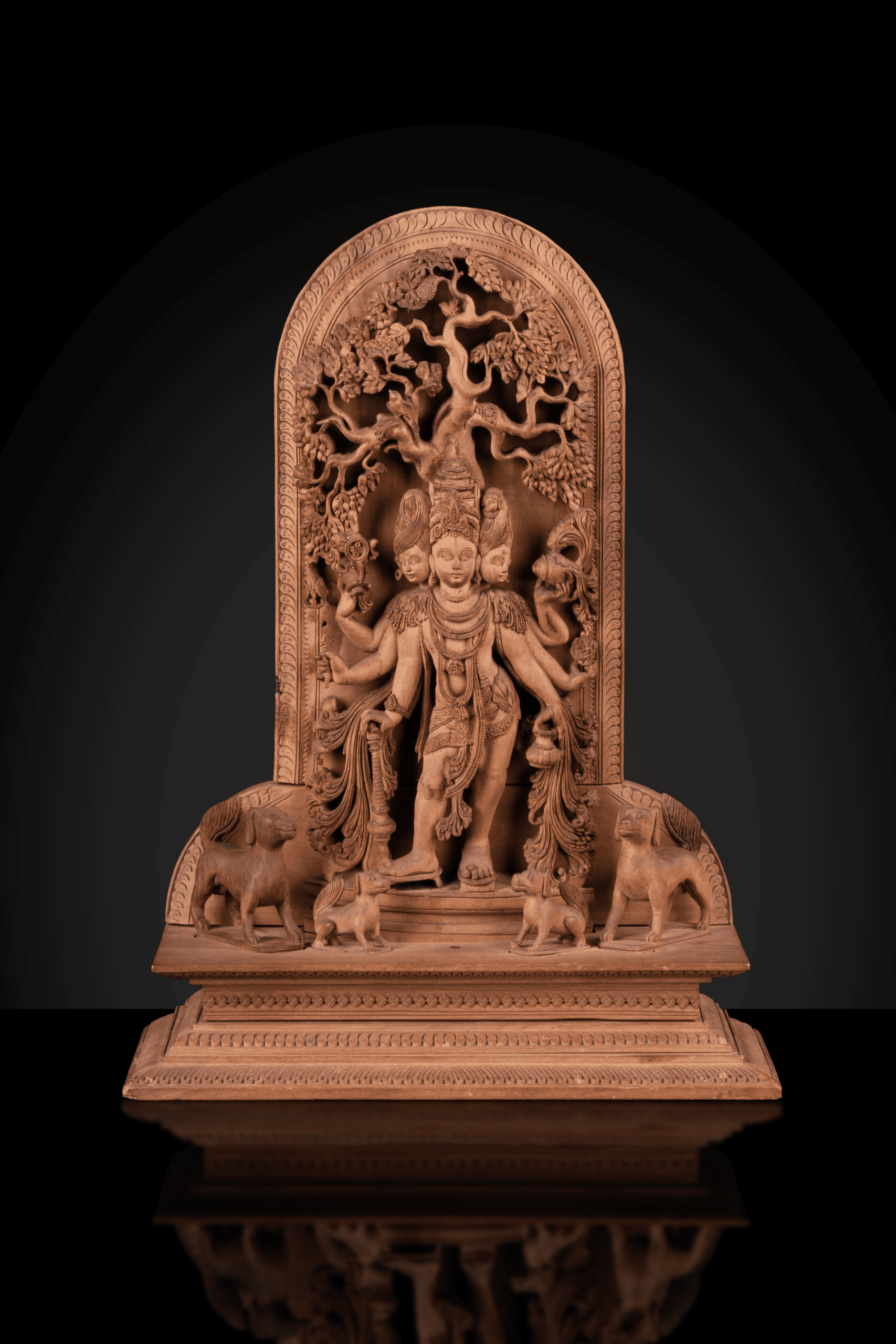
REGISTERED ANTIQUITY - NON-EXPORTABLE ITEM. Object Detail This Particular piece of Sculptural art represents an Image of Dattātreya, believed to be a minor incarnation of Lord Vishnu. He was an Aestic. In this portrayal, he is beautifully depicted ...read more


